AI Chatbots for Language Practice: Your 24/7 Conversation Partner
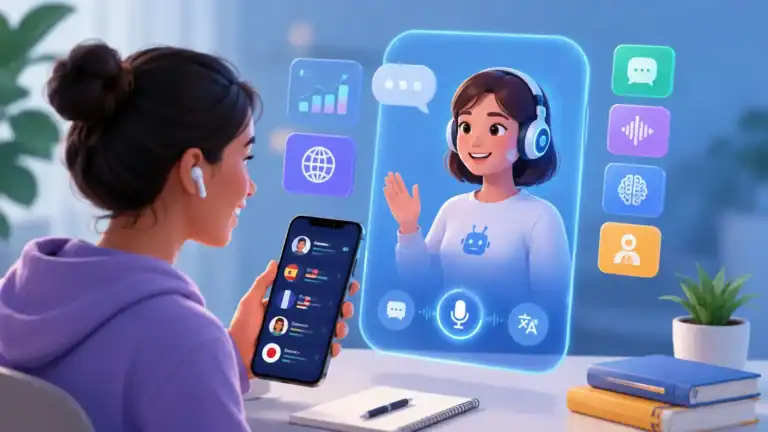
Ever wish you had a native speaker friend who never gets tired, never judges your mistakes, and is available to chat whenever you want, even at 2 AM in your pajamas? That’s exactly what AI chatbots for language practice offer. These sophisticated conversation partners use artificial intelligence to simulate realistic conversations, providing unlimited practice opportunities without the scheduling hassles or social anxiety of talking to real humans.
With AI chatbot technology advancing rapidly, language learners now have access to conversation practice that adapts to their proficiency level, corrects errors naturally, and simulates real-world scenarios, all from the comfort of home.
If you’ve ever wondered why understanding a language doesn’t automatically make you a speaker, why you can’t speak despite understanding explains the science behind the gap.
Many learners combine chatbot conversations with AI pronunciation coaching, adaptive learning systems, and structured tutoring platforms to build speaking confidence faster across multiple communication settings.
How AI Chatbots Work for Language Practice
Modern language learning chatbots use natural language processing (NLP) and machine learning to understand what you’re saying and respond contextually. Unlike older chatbots with scripted responses, today’s AI conversation partners can handle open-ended discussions about virtually any topic.
The technology behind AI chatbots:
Natural Language Processing: Enables the AI to understand the meaning and intent behind your messages, not just recognize keywords. These same natural language processing technologies also power modern AI pronunciation feedback systems and personalized language assessment tools that analyze learner progress in real time.
Context awareness: Modern chatbots remember previous conversation turns, maintaining coherent dialogue across multiple exchanges.
Adaptive responses: The AI adjusts vocabulary and grammar complexity to match your proficiency level, simpler for beginners, more sophisticated for advanced learners.
Error detection: Identifies grammar mistakes, vocabulary misuse, or awkward phrasing while you’re chatting.
Natural corrections: Provides feedback within conversation flow without disrupting practice, reformulating your mistakes correctly in their responses rather than stopping to lecture.
Think of it as having a patient friend who gently models correct language use while keeping the conversation engaging.
Best AI Chatbots for Language Learning
ChatGPT for Language Practice
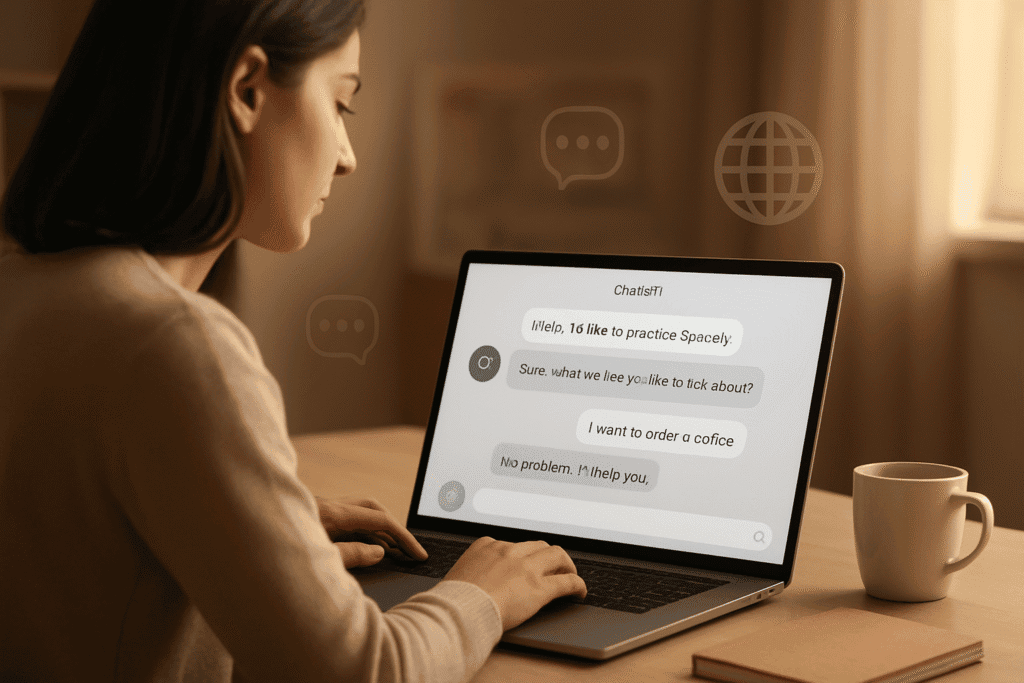
How it works: OpenAI’s ChatGPT has become incredibly popular for language practice. You can ask it to roleplay scenarios, correct your writing, or have conversations at specific proficiency levels.
Pros:
- Handles any topic or scenario you want to practice
- Provides detailed explanations when you ask “why is this wrong?”
- Can adapt to any language and proficiency level
- Generates creative conversation prompts when you run out of ideas
Many learners also combine chatbot practice with personalized AI language learning plans to structure conversation goals around vocabulary growth, pronunciation improvement, and fluency milestones.
Cons:
- Requires you to explicitly ask for corrections (won’t automatically point out every mistake)
- No speech recognition (text-only unless you use voice input features)
- May occasionally generate culturally inappropriate or inaccurate content
Best for: Intermediate to advanced learners who can direct their own practice and ask specific questions.
Replika
How it works: Replika is an AI companion that learns your personality and interests through conversations. While not specifically designed for language learning, it provides casual practice in multiple languages.
Pros:
- Personalized conversations based on your interests and personality
- Develops relationship over time, making practice feel more natural
- Available in multiple languages
- Combines text and voice chat options
Cons:
- Focus is companionship rather than education, may not systematically teach grammar
- Can be overly conversational and less structured than educational tools
- Requires subscription for full features
Best for: Learners wanting casual conversation practice that feels more like chatting with a friend than studying.
Andy English Bot
How it works: Specifically designed for English learners, Andy acts as a friendly tutor who chats with you and teaches grammar through conversations.
Pros:
- Specifically designed for language learning (not repurposed general AI)
- Provides grammar explanations within conversations
- Offers structured lessons alongside free chat
- Completely free to use
Cons:
- English only
- Less sophisticated conversation than GPT-based chatbots
- Limited to predefined topics and scenarios
Best for: Beginning to intermediate English learners who want structured guidance alongside conversation practice.
Mondly Chatbot
How it works: Integrated into the Mondly language learning app, this chatbot provides scenario-based conversations with speech recognition.
Pros:
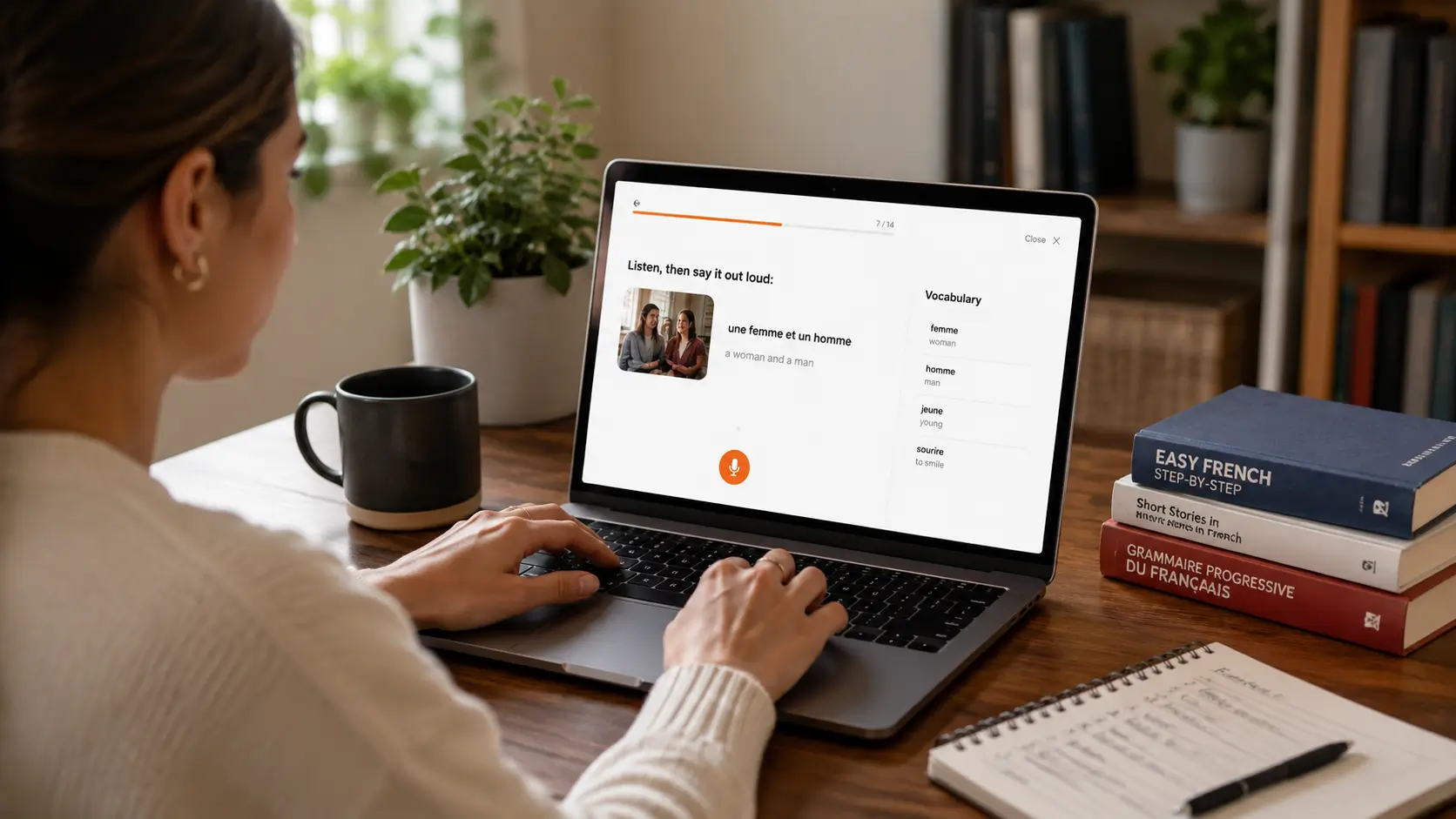
- Speech recognition allows pronunciation practice
- Structured scenarios (ordering food, booking hotels, etc.)
- Available for 40+ languages
- Integrated with Mondly’s broader curriculum
Cons:
- Less free-form than general AI chatbots
- Requires Mondly subscription for full access
- Scenarios can feel somewhat scripted
Best for: Learners who want guided conversation practice with specific vocabulary themes.
HelloTalk AI Features
How it works: HelloTalk’s AI features augment the language exchange platform with translation, corrections, and pronunciation assessment.
Pros:
- Combines AI assistance with real human language exchange
- Instant translation helps when you’re stuck
- AI suggests corrections for your messages
- Large community of native speakers
Cons:
- AI features are supplementary to human exchange, not standalone chatbot
- Requires finding human partners willing to chat
- Premium features require subscription
Best for: Learners who want AI-assisted human exchange rather than pure chatbot practice.
How to Practice Effectively with AI Chatbots
Getting maximum value from AI chatbot practice requires more than just random conversations. Here’s how to make every session count:
Set Clear Conversation Goals
Before starting a chat session, decide what you want to practice:
Vocabulary building: “Let’s discuss technology and innovation” (practice tech vocabulary). Dedicated AI vocabulary learning systems and spaced repetition strategies can make chatbot conversations significantly more effective by reinforcing newly learned words through active recall and repeated exposure. Grammar focus: “I want to practice past perfect tense in storytelling” Scenario prep: “Roleplay a job interview in Spanish” Cultural topics: “Tell me about traditional celebrations in France”. building vocabulary through drilling
Use Role-Play Scenarios
AI chatbots excel at roleplaying real-world situations:
Travel scenarios: Practice booking hotels, asking directions, ordering food at restaurants.
Professional situations: Job interviews, business meetings, client presentations, networking conversations.
Daily life: Shopping, going to the doctor, making appointments, casual small talk.
Emergency situations: Reporting problems, asking for help, explaining what’s wrong.
Treat the roleplay seriously, respond as you would in actual situations. This builds muscle memory for when you encounter these scenarios in real life.
Request Specific Corrections
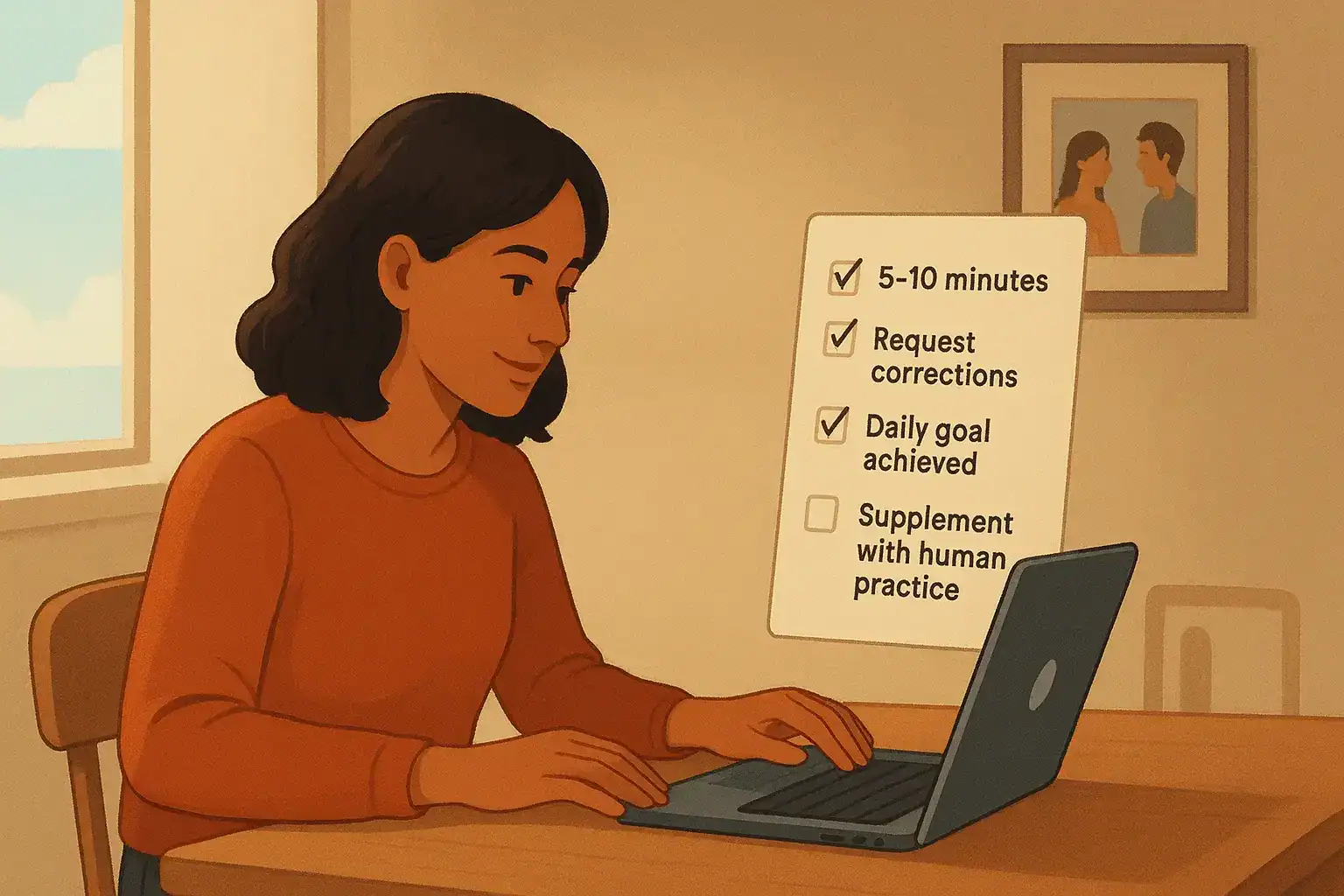
Don’t wait for the chatbot to correct you, explicitly ask for feedback:
- “Correct any grammar mistakes in my messages”
- “Tell me if I’m using vocabulary inappropriately”
- “Suggest more natural ways to say what I just wrote”
- “Explain why that sentence was wrong”
Most AI chatbots won’t overwhelm you with corrections unless you request it, so be proactive about asking for feedback.
Practice Daily Consistency
5-10 minute daily sessions beat weekly hour-long conversations. Brief daily practice builds habits and maintains momentum. I like to have a quick chat with an AI while drinking my morning coffee, it wakes up both my brain and my language skills!
Vary your practice: Don’t discuss the same topics every day. Mix casual conversations, formal discussions, creative storytelling, and practical scenarios to develop well-rounded communication skills.

Limitations of AI Chatbots to Understand
While AI chatbots provide tremendous value, they can’t completely replace human conversation:
Cultural Nuance Gaps
AI may miss subtle cultural references, inappropriate register for specific social contexts, or regional communication norms. A chatbot might not catch that your phrasing is technically correct but culturally awkward.
For example, AI might not know that in some cultures, direct refusals are considered rude, or that certain questions are too personal for first meetings.
Lack of Authentic Unpredictability
Real human conversations involve genuine emotions, spontaneous tangents, interruptions, misunderstandings, and the chaos that makes communication challenging and authentic. AI conversations remain somewhat predictable and controlled.
No Relationship Building
Language learning isn’t just about words, it’s about cultural connection and friendship. AI provides practice, but it can’t give you the motivation and joy that comes from actually connecting with another human being.
While AI chatbots are excellent for low-pressure practice, they still lack real corrective feedback, emotional nuance, and structured progression. That gap is why many learners eventually move to structured human tutoring for faster progress.
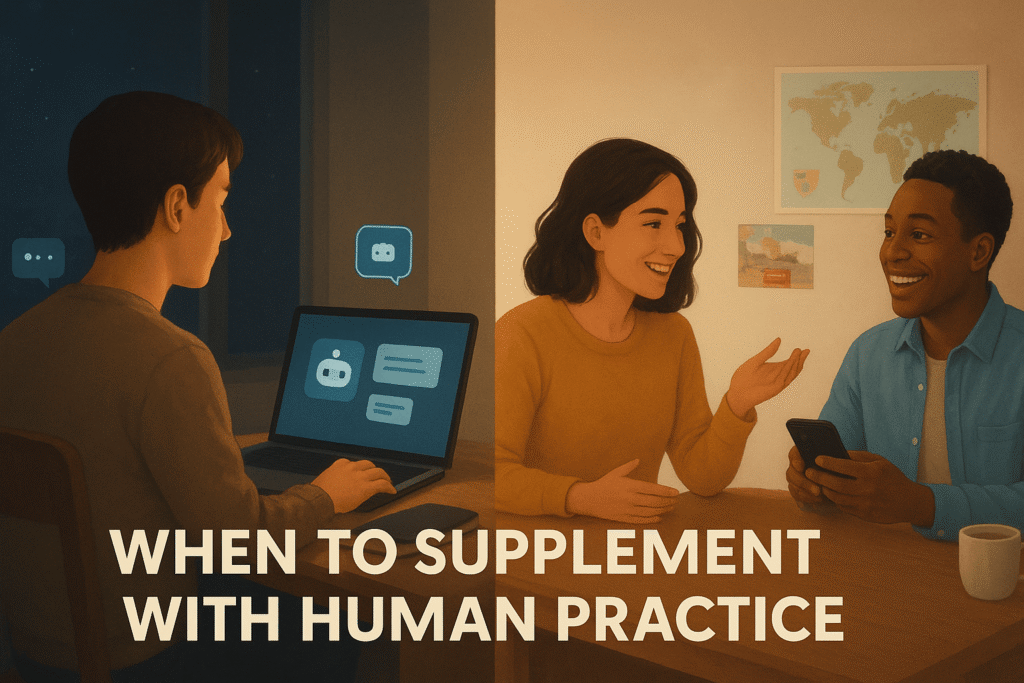
When to Supplement with Human Practice
Use AI chatbots for:
- Daily foundational practice (vocabulary, grammar drills)
- Low-pressure experimentation with new phrases
- Late night or odd hours when humans aren’t available
- Building confidence before human conversations
Supplement with human interaction for:
- Authentic cultural insights and current slang
- Emotional connection and motivation
- Unpredictable conversations testing true communication skills
- Building relationships that give you reasons to practice
For finding human conversation partners, dive into our guide on online language learning platforms: tutoring vs exchange. For learners ready to move beyond AI practice, this Preply review covers what structured human tutoring actually delivers, including what the research shows about real learning outcomes.
- Best Language Learning Platforms with Tutors
- Language Tutoring vs Exchange
- AI Pronunciation Coach
- VR and AR in Language Learning
Conclusion
AI chatbots for language practice represent a genuine breakthrough in accessibility and convenience. They provide unlimited conversation opportunities, adapt to your level, and create safe spaces for making mistakes without social anxiety.
The technology isn’t perfect, chatbots can’t fully replicate authentic human interaction or provide deep cultural insights. But they serve as excellent training wheels for building confidence and fluency before engaging in higher-stakes human conversations.
Start with one chatbot that matches your proficiency level and practice style. Commit to 5-10 minutes of daily conversation. Set specific goals for each session. Request corrections actively. And most importantly, supplement AI practice with regular human interaction to develop authentic communication skills.
Your 24/7 conversation partner is waiting. What will you talk about today?
For comprehensive information on all AI language learning technologies, explore how AI in language learning is revolutionizing fluency.
Frequently Asked Questions
Are AI chatbots as good as human conversation partners?
No. AI chatbots and human conversation partners serve different purposes. AI excels at unlimited practice, immediate availability, and low-pressure experimentation. Human interaction provides cultural authenticity, emotional nuance, and unpredictable real-world communication.
Most learners benefit from combining both approaches.
Can beginners use AI chatbots effectively?
Yes, especially when using structured language-learning chatbots like Mondly or Andy. Beginners often benefit from guided scenarios and built-in corrections before transitioning to more open-ended AI conversations.
Do AI chatbots work for all languages?
Major world languages currently have the strongest AI chatbot support, including English, Spanish, French, German, Chinese, Japanese, and Korean. Support for less common languages continues improving as AI language models expand.