Babbel Review: What You Should Know Before Subscribing (2026)
Quick Summary
▸Across tens of thousands of user reviews and two peer-reviewed studies, Babbel is best for beginner to intermediate learners (A1 to B1) who want structured grammar instruction and will practice daily.
▸The most consistent pattern across sources is that Babbel builds comprehension and grammar faster than it builds confident spontaneous speech, worth planning around before you subscribe.
How this page was built: This guide is based on analysis of Babbel’s own published research and pricing pages, and aggregated user reviews on Trustpilot and the App Store, not firsthand testing by Heklin. We’ll update this to a full hands-on review if direct testing becomes possible.
Last checked: August 2026. We re-verified Babbel’s current pricing tiers, Babbel Speak’s rollout status, and the current Trustpilot rating against the sources linked below.
More than 10 million people pay for Babbel every year. That number alone doesn’t tell you whether it’s worth your money, it tells you the company is good at marketing. The more useful question is what the people who actually paid for it, and the researchers who studied it, say once the trial period is over.
This review pulls those sources into one place: two independent academic studies, and the pattern across over 32,000 Trustpilot reviews and App Store and Google Play ratings.
Across every source we reviewed, from peer-reviewed university studies to thousands of individual Trustpilot entries, the same pattern holds: Babbel works if you show up daily, and it builds comprehension faster than it builds speaking confidence. Neither the research nor the user reviews suggest otherwise.
Is Babbel Worth It in 2026?
Yes for structured beginner-to-intermediate learners who’ll practice most days. Users and researchers agree it builds grammar and vocabulary well but rarely produces confident spontaneous speech on its own.
Two peer-reviewed studies back the comprehension and grammar gains. A study at Michigan State University found that among students who logged at least 15 hours in the app, 75% improved their speaking proficiency by at least one sublevel on the ACTFL scale. A separate study at Yale University’s Center for Language Study found all participants improved oral proficiency after roughly three months of use. Both studies involved Babbel staff as co-authors, which doesn’t invalidate peer-reviewed results but is worth knowing.
The 36% dropout rate in the MSU study is the detail worth sitting with: the strong numbers apply to people who stuck with it, not to everyone who signed up. That’s consistent with what shows up across thousands of Trustpilot reviews too, the learners who complain about slow progress are disproportionately the ones describing sporadic use.
Is Babbel Legit, or Is It a Scam
Babbel is legitimate. It’s a paid German company (Lesson Nine GmbH) with a 4-star Trustpilot rating across roughly 32,000 reviews and academic studies behind its method.
The complaints that show up most often on Trustpilot aren’t scam allegations, they’re usability gripes:
- Inability to slow down native-speaker audio
- Occasional app bugs like a blank account screen after purchase
- A font in spelling exercises that some older users report confusing (mixing up “c” and “e,” or “l” and “t”)
None of that amounts to a legitimacy problem, but it’s a real usability pattern worth knowing before you pay.
What Do Real Babbel Users Actually Say
Trustpilot shows a consistent 4-star rating across tens of thousands of reviews. Users praise the variety of exercise types and the review feature; the most common criticism is slow progress past the beginner level.
Source | Rating / volume | What’s praised | What’s criticized |
|---|---|---|---|
4-star TrustScore, 32,000+ reviews | Multi-modal lessons (listening, speaking, writing), the mistake-review feature, ease of restarting after a long break | Can’t slow audio playback speed, occasional account/access bugs, exercises can feel repetitive once a course is “completed” | |
App Store / Google Play | Historically 4.5 to 4.7 stars | Ease of use, short daily lessons | Limited free tier, cost relative to free alternatives |
Does Babbel Work for Complete Beginners?
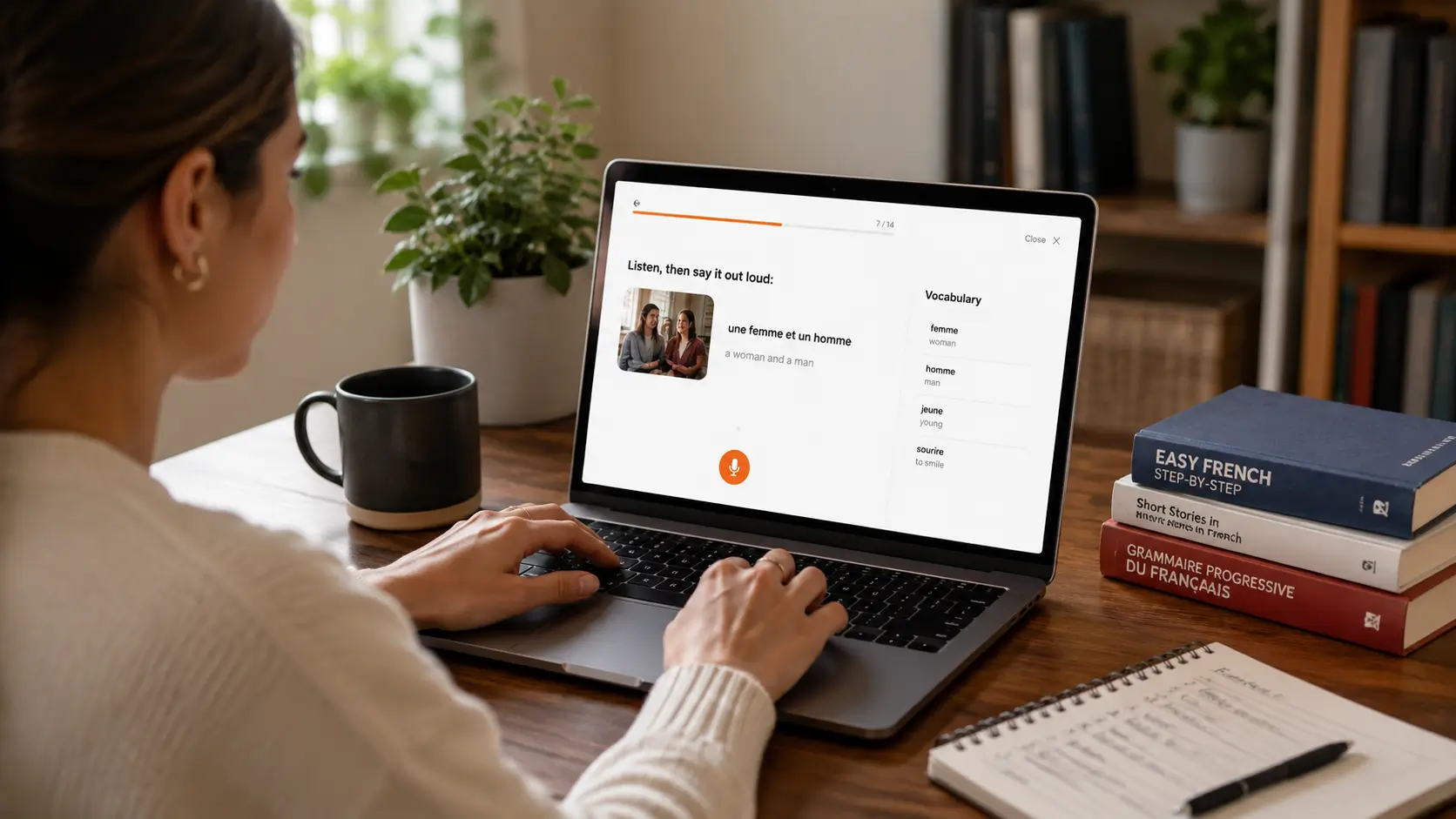
Yes. Babbel’s A1 path is one of its most consistently praised features across both academic research and user reviews, since courses are built around the specific mistakes speakers of your native language make.
Babbel vs Duolingo: Which Should You Choose
Choose Babbel for grammar depth and real conversation scenarios. Choose Duolingo for a genuinely free tier and more languages. Both plateau around the same intermediate wall.
A beginner who wants zero-commitment exposure is generally better served starting with Duolingo’s free tier. A learner who has already decided to commit to one language seriously gets more out of Babbel’s structure.
Both eventually hit the same intermediate plateau, the Trustpilot and App Store data for Babbel show complaints clustering around pacing past the beginner stage, not around the beginner experience itself, which suggests the plateau is a category problem, not a Babbel-specific one.
Babbel is built for the learner who wants structure and real grammar instruction, not streaks and leaderboards. If gamification is what keeps you consistent, Duolingo is the more honest recommendation.
Do You Still Need Babbel If You Have ChatGPT
Probably yes, for structure. ChatGPT can correct grammar and generate practice on demand, but it has no curriculum, no built-in pronunciation feedback, and no accountability loop the way a daily app lesson does.
I want to include this question instead of assuming everyone already knows why a paid app still matters next to a free chatbot.
The gap AI tools leave: a beginner doesn’t know what to ask for next, so self-directed AI practice tends to be unfocused without some external structure.
Where Does Babbel Fall Short, According to Independent Sources?
The recurring gap in both the academic research and the Trustpilot pattern is spontaneous speaking. Babbel builds comprehension and grammar faster than it builds confident, unscripted conversation.
- The Yale and MSU studies both measured oral proficiency gains under guided conditions, not unscripted, real-world conversation, which is a narrower thing to measure than open speaking ability.
- Babbel Speak, the app’s AI conversation feature launched in September 2025, is still limited to guided scenarios rather than open-ended conversation.
- Trustpilot’s most common negative pattern isn’t about content quality, it’s the inability to slow down native-speaker audio, which several reviewers say makes early listening exercises harder than they need to be.
- The exercise format itself, fill-in-the-blank, matching, and speak-into-the-mic prompts, is built for guided recall rather than free production, which is a structural reason speaking confidence tends to lag comprehension.
How Much Does Babbel Cost in 2026?
Babbel runs $8.95 to $13.95 per month depending on term length, plus a $299.99 lifetime option that’s frequently discounted to $130 to $170 through promotions.
Plan | Monthly cost | Billed as |
|---|---|---|
1 month | ~$13.95 | Monthly |
6 months | $13.45/month | $80.70 upfront |
12 months | $8.95/month | $107.40 upfront |
Lifetime | One-time payment | $299.99 |
Group (up to 6 users) | $30.95/month | ~$5.16 per person |
Can You Get a Refund If Babbel Doesn’t Work Out?
Yes. Babbel offers a 20-day money-back guarantee on subscriptions bought directly through its site. Purchases through the App Store or Google Play follow those platforms’ own refund policies instead.
Is the Babbel Lifetime Subscription Worth It?
At the standard $299.99 price, the lifetime plan breaks even against the annual plan ($107.40/year) after approximately 34 months of use, just under three years. At the discounted rate of $130 to $159, that break-even point drops to roughly 15 to 18 months.
The lifetime plan makes financial sense if you are a committed learner planning to study for two or more years, or if you want access to multiple languages over time. It does not make sense if you are unsure whether you will stick with it. The annual plan at $8.95 per month is the safer starting point for most people.
Babbel Review: Pros and Cons
What Babbel Does Well
Where Babbel Falls Short
- Limited free content. One lesson per course is not enough to meaningfully evaluate the app before paying. Duolingo’s entirely free tier is a genuine alternative if budget is the constraint.
- Fewer languages than competitors. 14 languages is a deliberate choice for quality control, but if you are learning Mandarin, Arabic, Hindi, or any language outside the 14, Babbel is not an option.
- Less engaging for users who prefer gamification. There are no streaks, leaderboards, or competitive elements. Some learners find this refreshingly serious. Others lose motivation without them.
- Advanced learners will outgrow the content. The curriculum tops out at roughly B1. If you are already conversational and want to push to B2 or beyond, Babbel will not get you there.
Who Should Use Babbel and Who Shouldn’t
Babbel is a good fit for:
- Beginners learning their first foreign language who want a structured, expert-built curriculum
- Travellers preparing for a trip and needing practical vocabulary fast
- Expats relocating and needing functional language skills for daily life
- Professionals who want practical conversation skills for work situations
- Former Duolingo users who found the app too gamified or too shallow
- Adult self-directed learners who prefer grammar explanations over pattern memorisation
- Students supplementing classroom learning with daily practice
Babbel is not the right fit for:
- Advanced learners already at B1 or above who need to push past conversational level
- Learners of languages outside Babbel’s 14, including Mandarin, Arabic, Japanese, and Korean
- Anyone who needs live conversation practice, particularly without a tutor or speaking partner
- Gamification-motivated learners who rely on streaks and leaderboards for consistency
If you are still deciding whether Babbel is the right starting point, Best Language Learning Apps for Beginners compares it against the other top options for first-time language learners.
For a broader look at how Babbel compares across the full market, Best Language Learning Apps for Fluency ranks the top options by learning goal and budget.
Worth reading next:
▪ If you want the full picture of how modern tools, apps, AI tutors, and SRS systems fit together into a learning stack, The Ultimate Guide to Language Learning Technology maps it all out.
▪ Not sure whether an app is even the right format for your goals? How to Choose a Language Learning Method walks through the decision based on your schedule, budget, and fluency target.
▪ Babbel vs Rosetta Stone: Which Is Better breaks down the methodology and pricing gap in full.
Final Verdict: Should You Subscribe to Babbel?
Line up the academic research and the Trustpilot volume, and they point the same direction. Babbel earns its subscription price for a beginner or intermediate learner who wants real grammar instruction and will actually open the app most days. It doesn’t earn that price for someone who needs live conversation practice, a language outside its 14, or gamified motivation to stay consistent.
The honest gap nobody’s marketing copy mentions: comprehension comes faster than speaking confidence, in the university studies and in the Trustpilot pattern alike. Budget for that from day one and pair it with real conversation once you clear A2, and the subscription holds up. Skip that step and you’ll be one of the reviewers wondering why you can understand more than you can say.
Three questions to make the decision:
- Do you prefer structured grammar instruction over gamified repetition? If yes, Babbel fits your learning style.
- Is your target language one of Babbel’s 14? If no, stop here and look elsewhere.
- Will you practice consistently for at least six months? If yes, the annual plan at $8.95 per month is one of the best value structured language tools available.
This page will be updated with a full firsthand test. Check back for that update, or subscribe to the newsletter to be notified when it goes live.
Try the free first lesson before committing. Babbel gives you access to the first lesson of every course at every level without a credit card. That is enough to know whether the teaching style suits you.
Frequently Asked Questions
Is there a free version of Babbel?
Babbel isn’t free, but the first lesson of every course at every level is accessible without payment or card details. A subscription is required after that.
Is Babbel or a free AI chatbot enough on its own?
Most independent comparisons, including reviewers weighing Babbel against ChatGPT directly, conclude a structured app or course still outperforms open-ended AI chat for beginners, mainly because AI tools have no curriculum telling you what to study next.
Is Babbel a scam?
No. It’s a paid subscription from an established German company with a public 4-star Trustpilot rating across tens of thousands of reviews and two peer-reviewed university studies behind its method. Complaints found in user reviews are about usability, not deception.
Does Babbel work offline?
Yes, lessons can be downloaded through the mobile app. The Babbel Speak AI conversation feature requires an internet connection.
How long before I see results with Babbel?
The MSU study found measurable grammar and vocabulary gains after 12 weeks, with the strongest results among learners who logged 15 or more hours. User reviews on Trustpilot broadly echo this: most describe noticeable comprehension gains within the first month of consistent daily use.