Lingoda vs Preply: Which Fits Your Learning Style?
Quick Summary
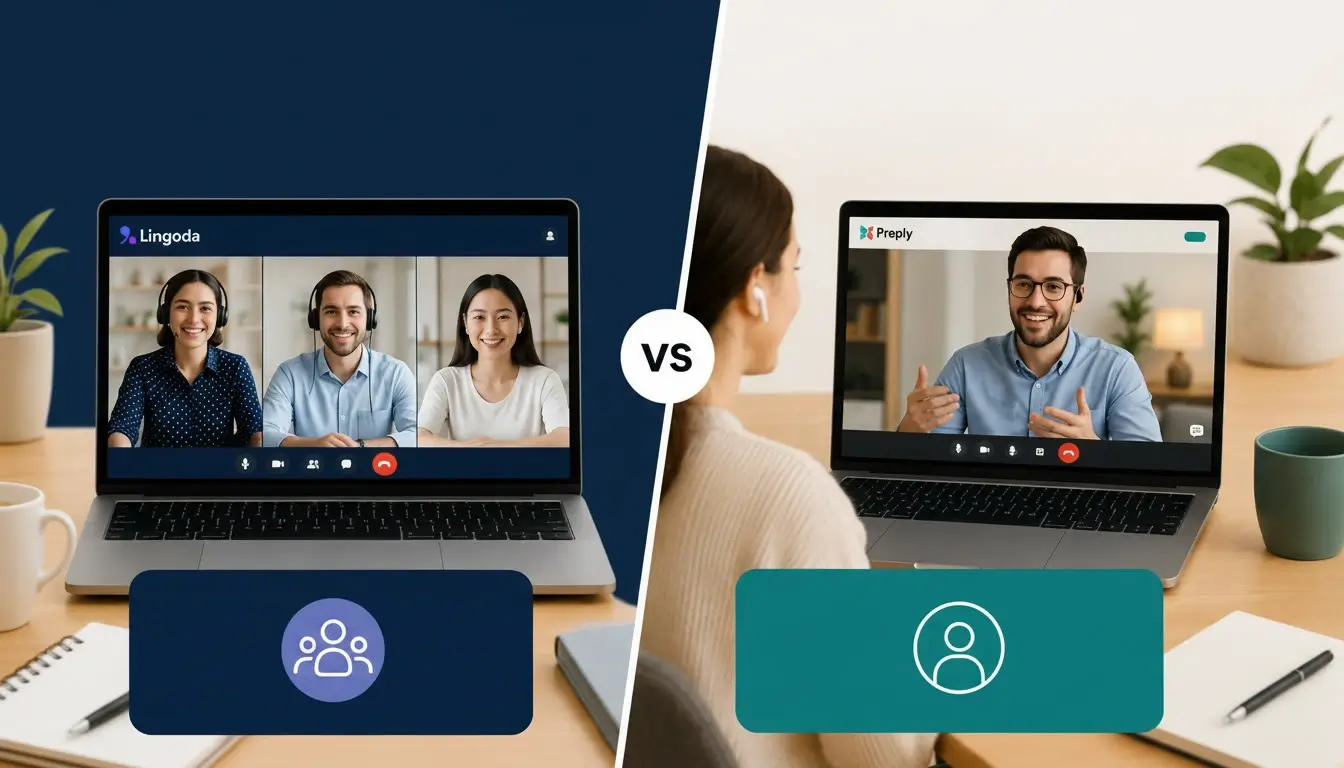
▸Lingoda vs Preply comes down to one core choice: a structured group class school versus a one on one tutoring marketplace.
▸Lingoda runs small group classes (3 to 5 students), follows CEFR levels, covers 6 languages, and costs $80 to $550 a month depending on intensity.
▸A 2020 NBER meta-analysis found that one on one and small group tutoring produce measurable learning gains over standard group instruction.
▸Lingoda’s curriculum has a hard ceiling per language (some languages stop around B2 or C1).
A 2020 meta-analysis from the National Bureau of Economic Research found that tutoring, whether one on one or in small groups, produces real, measurable learning gains compared to standard classroom instruction. That single study cuts to the heart of the Lingoda vs Preply question.
What actually matters once you’re a few months in: what happens when you outgrow Lingoda’s curriculum in your language, and which platform matches your actual reason for learning, whether that’s a relocation, a stalled speaking level, or a professional certification.
This guide covers the real difference in learning model, the research behind why it matters, the level ceiling problem nobody talks about, honest pricing, and a clear answer for who each platform actually fits.
What’s the difference between Lingoda and Preply?
Lingoda is a structured, group class language school. Preply is a marketplace where you pick and pay an individual tutor for one on one lessons.
On Lingoda, you’re assigned a teacher from a pre-screened pool for each scheduled class, and you follow a fixed curriculum tied to CEFR levels (the A1 to C2 scale used across Europe to measure proficiency). Classes run in groups of 3 to 5 students, and you don’t choose who teaches you or who your classmates are. That trade-off buys you consistency: every student following the same course covers the same material in the same order.
Preply flips that. You browse tutor profiles, watch intro videos, read reviews, and book lessons directly with the person you choose. There’s no shared curriculum unless you and your tutor build one together. You set the pace, the topics, and the schedule.
I took six live Italian group classes on Lingoda to see how the structure actually plays out day to day. Every class arrives with a warm-up PDF beforehand, runs almost entirely in the target language, and ends with a personalized teacher report you have to rate the class to unlock. Group sizes were small (four students was the largest class I sat in, and one session was just me and one other learner), and the teacher rotates each session, so you’re not tied to one instructor’s style. That combination of structure and rotation is the actual texture behind the word “structured” that most comparisons throw around without ever having sat in a class.
Is Lingoda or Preply better for beginners?
Lingoda is generally the stronger fit for total beginners because its standardized curriculum removes the guesswork of figuring out what to study and in what order.
Research on English learners backs this up: a research synthesis on instructional strategies for English learners found that one on one and small group instruction is consistently recommended as one of the most effective approaches for students starting from scratch, especially those without a strong linguistic foundation yet. Bloom’s foundational research on tutoring versus group instruction found similar patterns decades earlier, showing that structured, guided instruction produces stronger early gains than unguided self-direction.
On Preply, a beginner can absolutely succeed, but success depends more heavily on picking the right tutor and being disciplined enough to request structure rather than open-ended conversation. If you’re new to a language and don’t want to manage that yourself, Lingoda does more of that work for you.
Does one on one tutoring actually work better than group classes?
Yes, and there’s a documented effect size behind that claim, not just an assumption. The 2020 NBER meta-analysis of tutoring interventions found meaningful learning gains from one on one and small group formats compared to standard classroom teaching, with the strongest effects coming from tutors with formal training or certification.
A more recent working paper from Brown University’s Annenberg Institute pushed on this further, examining whether those effects hold up when tutoring is delivered at scale rather than in small research studies. The paper found that effect sizes are real but vary depending on tutor training, session frequency, and program design, not just the format itself.
The research doesn’t say group classes don’t work. It says personalized instruction has a documented advantage that grows larger the more experienced or trained the instructor is. Once you’re past the beginner stage and need targeted correction, that advantage starts to matter more.
What happens when you hit Lingoda’s highest level in your language?
Lingoda’s curriculum stops at a fixed ceiling for each language, and once you reach it, there’s nowhere left to go on the platform.
I ran into it myself when I took Lingoda’s Italian placement test. I scored a B1.1, intermediate level. When I went to book my first class, I found out Lingoda’s Italian course currently only goes up to A2.2. They’re working on B1 content, but there’s no launch date yet. Support was upfront about it once I asked (their exact words: the placement test isn’t linked to what’s actually offered, it’s just a level assessment), but it isn’t flagged before you sign up.
Course depth genuinely isn’t equal across Lingoda’s six languages, so if you’re already past a beginner level in your target language, it’s worth checking what’s actually available before you commit to a plan. If your language and level fall outside what Lingoda currently offers, Preply is where you’d continue, since tutors there build lessons around wherever you already are rather than a fixed course ceiling.
This is exactly why some learners run both platforms over time: Lingoda to build the foundation, then Preply once the curriculum runs out. See my full Lingoda review for the complete breakdown of what six live classes actually looked like, including the placement test surprise and what my post-class teacher reports revealed about my actual weak spots.
Which is cheaper, Lingoda or Preply?
Preply is usually cheaper at low usage, while Lingoda can work out cheaper per class at high intensity, but only if you commit to the plan size that matches how often you’ll actually show up.
|
| |
|---|---|---|
Pricing model | Monthly subscription, billed every 4 weeks | Pay per lesson, tutor sets rate |
Typical cost | $89.99 to $469.99/month depending on class volume (5 to 40 classes) | $5 to $40+/hour depending on tutor |
Cost per class | $11.75 to $18.00 per class, depending on volume | Same as the hourly rate above, most lessons run 25 to 60 minutes |
Commitment | No contract, pause or cancel anytime | Book as little or as much as you want |
Currency note | Also billed in EUR; exact conversion varies by plan | Multiple currencies supported, though limited to a handful |

On a per-class basis, Lingoda runs $11.75 to $18.00 (roughly €11 to €17), depending on how many classes you book, putting it in the same range as a mid-tier Preply tutor. A light user taking a couple of Preply lessons a week at a mid-range tutor rate will likely spend less monthly than Lingoda’s lowest tier.
On Lingoda’s own pricing, three classes a week on the 12-class plan works out to roughly €140 a month, which is comparable to a mid-range gym membership. The difference is that a gym membership gets you equipment you might use, while Lingoda gets you a skill you keep. If you’re learning for work, it’s also worth asking your employer about reimbursement, since many companies cover language training, especially with a CEFR certificate to show for it.
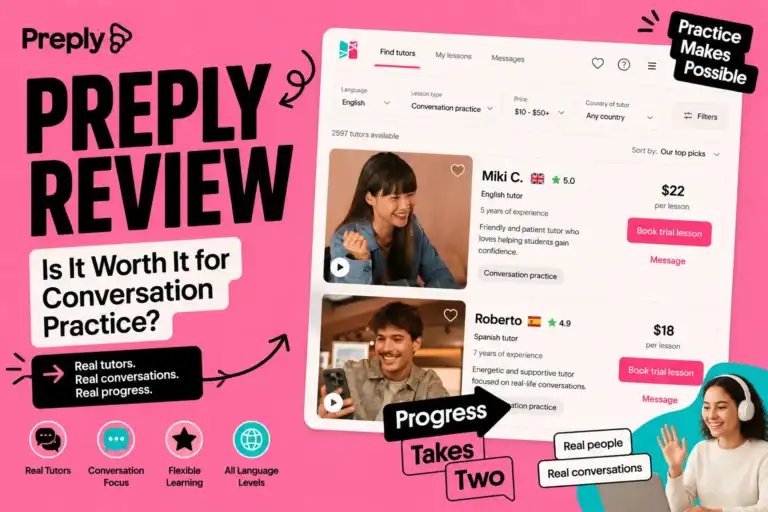
For a closer look at tutor quality, pricing, and how the subscription model actually works, our full Preply review breaks it down in detail.
If you’re set on Spanish specifically, Comligo is worth a mention alongside Lingoda and Preply. It runs on a weekly subscription rather than Lingoda’s monthly billing: 1:1 classes with a native tutor start at $30/class for one session a week and drop to $20/class at three sessions a week.
Like Lingoda, the per-class rate falls as you commit to more volume, but unlike Preply’s open marketplace of independent tutors, Comligo assigns you within its own teaching team, so it lands as a middle ground between Lingoda’s structure and Preply’s flexibility.
And if it’s Preply’s one-on-one marketplace model you’re drawn to rather than Lingoda’s structured classes, italki is the other major player in that space, our italki vs Preply comparison breaks down how the two stack up on tutor availability, pricing, and lesson quality.
Is Preply tutor quality consistent?
No, not by design, since Preply doesn’t vet or standardize its tutors the way Lingoda pre-screens its teaching staff.
Preply tutors go through an application process that includes identity verification and, depending on the subject, a required credential or degree to get approved at all. What Preply doesn’t do is require every tutor to hold a formal teaching qualification the way a language school trains and hires its staff, and there’s no shared curriculum or teaching standard enforced once someone’s approved. So quality genuinely varies from highly experienced, certified teachers (look for the verified “Professional Tutor” badge) to enthusiastic native speakers with a degree but no classroom training. That’s not automatically a downside. It means you’re responsible for using the tools Preply gives you: trial lessons, written reviews, and the ability to switch tutors freely if the fit isn’t right.
If you want a systematic way to evaluate a tutor before booking, our guide to finding your perfect online language tutor walks through credentials to check, red flags to avoid, and what to ask during a trial lesson.
Lingoda’s teaching staff all come pre-trained and credentialed as language educators, so there’s less variance to manage on your end. The real difference is depth of relationship: Preply lets you settle into an ongoing one-on-one dynamic with a single tutor, while Lingoda has you choosing from a shared pool of pre-screened teachers class by class.
Can you use Lingoda and Preply together?
Yes, and it’s a common approach. Many learners use Lingoda for structured, curriculum-based progress and add Preply on the side for extra speaking practice, a niche language Lingoda doesn’t offer, or continued study once they’ve hit Lingoda’s level ceiling in their target language.
This combination works especially well if you like Lingoda’s accountability structure (its Sprint challenges reward consistent attendance) but also want personalized correction on specific weak points a group class can’t give you enough time for.
For learners weighing more than just these two options, our roundup of the best language learning platforms with tutors puts Lingoda and Preply alongside nine other platforms.
Lingoda vs Preply for professionals and expats relocating abroad
Professionals and expats are often lumped together, but they usually need different things.
Professionals working toward a formal qualification or workplace requirement benefit from Lingoda’s CEFR-aligned certificates, since a recognized credential (Lingoda’s Business English track included) carries more weight with an employer than an informal tutoring relationship.
Expats relocating for their own or a partner’s job or a lifestyle move typically need something more practical: everyday functional vocabulary, comfort with local bureaucracy and small talk, and flexibility around an unpredictable moving schedule.
That second need points more toward Preply, where you can find a tutor who focuses specifically on conversational, situational language rather than working through a fixed course. If certification matters for your visa, job, or professional standing, Lingoda’s structured path is the stronger case. If your goal is simply functioning comfortably in daily life as fast as possible, a tutor who adapts to your specific situation on Preply will likely get you there faster.
Lingoda vs Preply for breaking through a speaking plateau
Preply’s one on one format gives you more individual speaking time per session, which matters most if you’re stuck at the “I understand everything but freeze up when I try to speak” stage.
In a Lingoda group class with 3 to 5 students, your actual talk time per class is naturally divided among everyone in the room. On Preply, every minute of the lesson is yours, and a tutor can spend the entire session on your specific hesitation points.
This ties back to the tutoring research already covered: more individualized correction generally means more targeted speaking practice, and that includes repetition on specific sounds or patterns that are harder to isolate in a group setting.
A few more useful guides:
- Why Can’t I Speak a Foreign Language Despite Understanding It? if the plateau you’re hitting feels more like a mental block than a knowledge gap, this digs into the psychology behind that specific freeze and how to work through it.
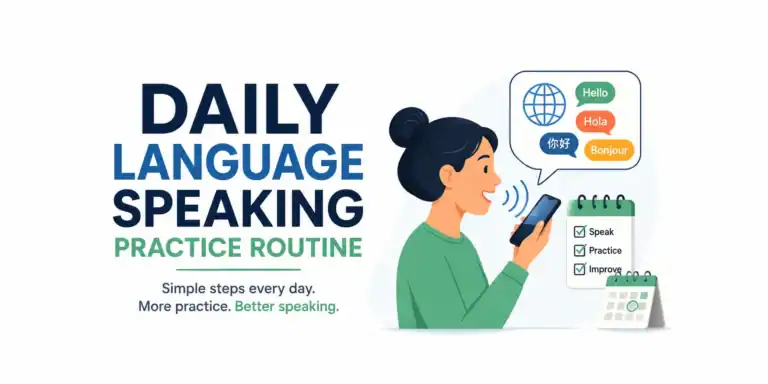
- Daily Language Speaking Practice Routine a simple, repeatable routine for turning whatever lesson time you book, on either platform, into actual spoken fluency between sessions.
The verdict
Choose Lingoda if you want a fixed curriculum, formal certification, and built-in accountability, and your target language and level fit comfortably within what Lingoda actually offers. Choose Preply if you’ve hit that ceiling, need a language Lingoda doesn’t teach, want personalized correction for a speaking plateau, or your goal is practical, everyday fluency rather than a formal credential.
If you’re already leaning toward Lingoda, it’s worth noting there’s a summer promotion running through early August 2026, so timing may work in your favor if you were going to sign up anyway.
Whichever platform fits your situation, start with the deep dive: read the Lingoda review or the Preply review before you commit to a plan.
Frequently Asked Questions
Does Lingoda offer a free trial?
Lingoda offers a trial period that lets you sit in on live classes before committing to a monthly plan, so you can judge the group format and teaching style firsthand.
Can I switch tutors on Preply without penalty?
Yes. Preply lets you change tutors at any time, and if a trial lesson doesn’t work out, you’re generally offered a replacement or refund rather than being locked into that tutor.
Does Lingoda’s certificate count for university or visa applications?
Lingoda’s certificates are aligned with CEFR levels and accepted by many institutions and employers, but requirements vary by university, employer, or immigration authority, so it’s worth confirming acceptance directly with the specific institution before relying on it.
Is Lingoda or Preply better than Duolingo?
Neither is a direct Duolingo replacement. Duolingo is free and comfortable, but both Lingoda and Preply add live, human interaction and real correction that a self-guided app can’t, which is exactly the jump learners need once they can recognize vocabulary but still freeze up speaking.
Is there a minimum commitment period on either platform?
Lingoda operates on monthly subscription plans, so you’re committed for at least one billing cycle. Preply has no fixed commitment. You can book a single lesson or a recurring subscription with a tutor and adjust or cancel as needed.