Adaptive Learning in Language Apps: How Personalization Accelerates Fluency
Imagine having a language tutor who knows exactly which grammar concepts confuse you, which vocabulary words you’re about to forget, and precisely when you’re ready for more challenging content—all adjusting in real-time as you learn. That’s adaptive learning in language apps: sophisticated algorithms that personalize your learning path based on your unique performance, creating the optimal challenge level at every moment.
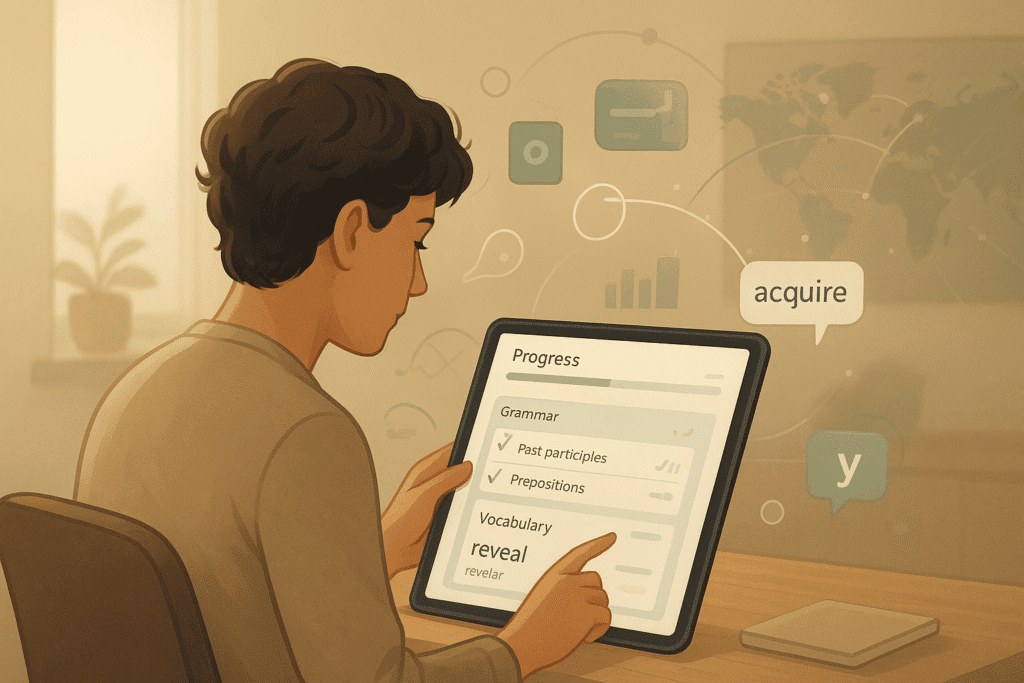
Most language apps used to teach everyone the exact same way. Adaptive learning changed that. These apps now adjust as you learn — speeding up when things feel easy, slowing down when you hit a wall, and reviewing words right before you’re about to forget them. It’s a much more personal way to learn a language, and honestly, it feels closer to having a tutor than following a fixed course.
How Adaptive Learning Algorithms Work
Adaptive learning systems use artificial intelligence to create personalized education experiences. Here’s what happens behind the scenes when you use an adaptive language app:
Initial Assessment
Placement testing: When you start an adaptive language app, you complete exercises that quickly gauge your current proficiency. The system doesn’t waste time testing what you obviously know or frustrating you with impossibly difficult content.
Learning style detection: Beyond proficiency level, advanced systems identify how you learn best—whether you respond well to visual cues, audio reinforcement, written exercises, or conversation practice.
Goal identification: What motivates you matters. Are you learning for travel, business, academics, or personal enrichment? Adaptive systems prioritize vocabulary and scenarios matching your goals.
Continuous Performance Monitoring
Once you start learning, the AI constantly watches and analyzes:
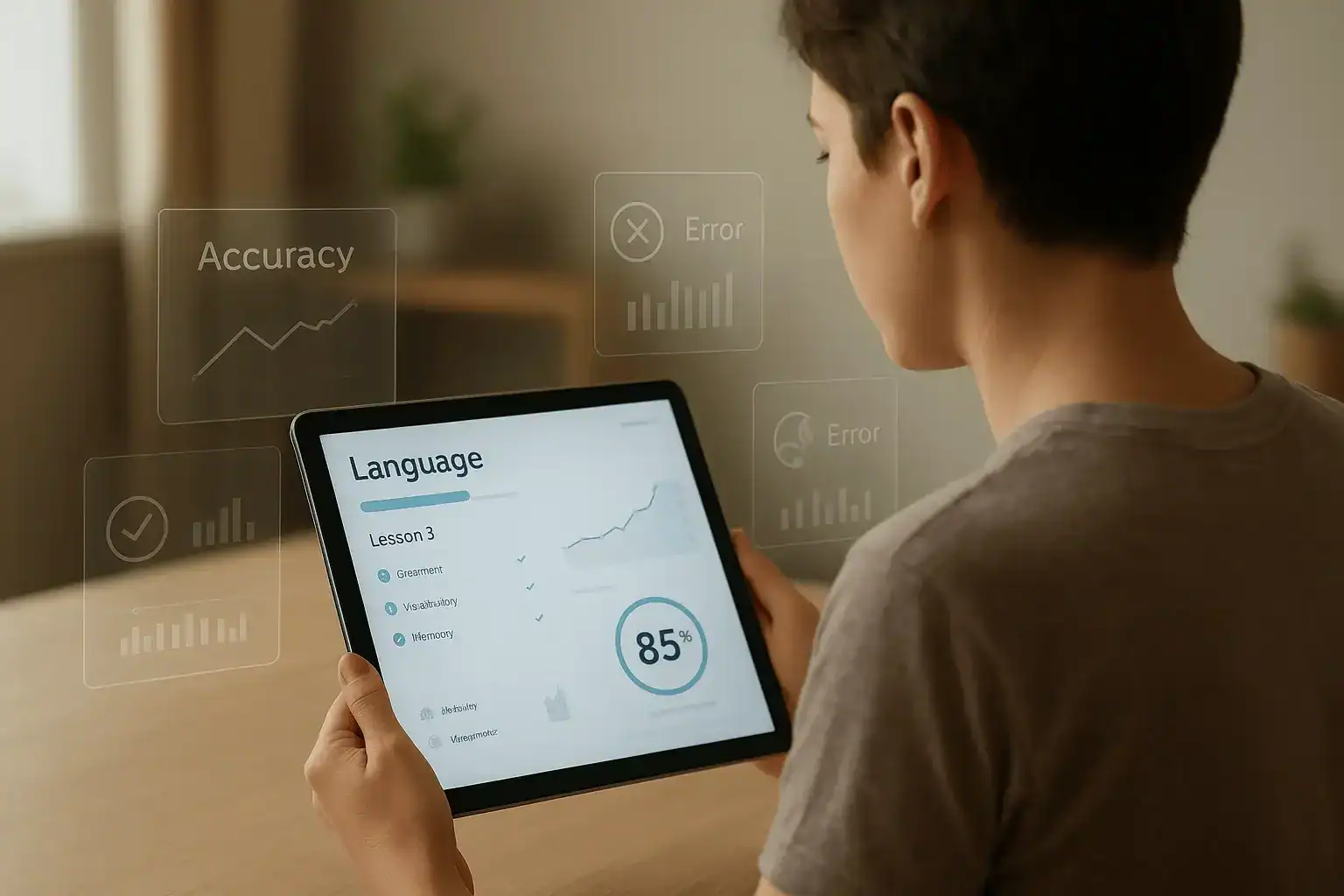
Accuracy tracking: Which questions do you answer correctly? Which ones cause difficulty?
Response time: How long do you hesitate before answering? Quick responses indicate mastery; long pauses suggest uncertainty even if you eventually answer correctly.
Error patterns: Are your mistakes random, or do they cluster around specific grammar concepts or vocabulary categories? The best practices for AI vocabulary learning cover exactly how this error pattern analysis works in practice.
Help requests: When do you use hints, translations, or skip buttons? These behaviors reveal where you’re struggling.
Review patterns: How well do you retain information over time? Do you remember yesterday’s vocabulary or forget it completely?
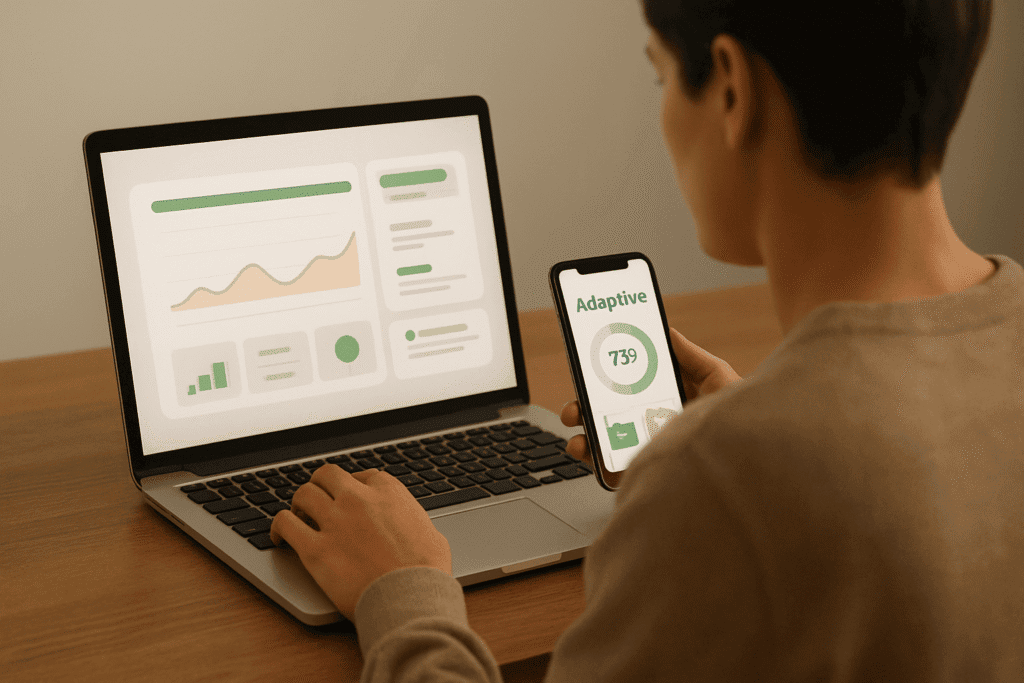
Every interaction feeds data into your learner profile, painting an increasingly accurate picture of your abilities and challenges. You’ll notice this in a lot of modern language assessment apps too. They don’t just score you once and move on — they track patterns over time to see where your fluency is actually improving and where you still need work.
Real-Time Difficulty Adjustment
Based on continuous monitoring, the algorithm adjusts what you see next:
Answer three questions correctly? The app increases difficulty—introducing more complex vocabulary, faster speech, or trickier grammar constructions.
Struggle with multiple questions? The system backs off, providing easier content and additional explanations to rebuild confidence before trying again.
Show mastery of a concept? The app moves on rather than boring you with repetitive practice of skills you’ve clearly acquired.
Repeatedly miss specific content? The algorithm schedules more targeted practice with that material, approaching it from different angles until you finally get it.
This creates the “Goldilocks zone”—not too easy (boring), not too hard (frustrating), but just right (engaging and productive).
Predictive Analytics
The most sophisticated adaptive systems don’t just react to your past performance—they predict your future needs:
Forgetting curves: Algorithms calculate when you’re likely to forget specific words or concepts, scheduling review right before memory decay occurs. If this sounds familiar, it’s because adaptive learning borrows a lot from spaced repetition systems — reviewing words at the moment your brain is most likely to forget them.
Struggle prediction: Based on patterns from millions of learners, the system predicts which concepts you’ll likely find difficult and proactively provides extra support.
Optimal progression: AI determines the perfect pace for introducing new material—fast enough to maintain engagement, slow enough to ensure solid foundation.
And the research doesn’t disappoint here — the statistics on AI-powered language tools show that adaptive platforms are reporting up to 30% better outcomes compared to fixed-curriculum approaches, which is a meaningful gap when you’re investing real time in learning.
Language Apps with Best Adaptive Learning
Duolingo’s Adaptive System
Duolingo pioneered consumer-friendly adaptive learning in language education, and their system continues evolving:
How it adapts: Duolingo tracks accuracy, hesitation time, and review performance to adjust which words and grammar concepts appear in your exercises. The spaced repetition algorithm schedules review of words you’re likely forgetting.
Adaptive features:
- Skill strength indicators showing which topics need review
- Personalized practice sessions focusing on your weak points
- Adaptive stories that adjust difficulty based on comprehension
- Error-based lesson generation targeting persistent mistakes
Strengths: Excellent at vocabulary retention through spaced repetition. Makes adaptive learning feel effortless through game-like interface.
Limitations: Still follows relatively rigid curriculum structure. Less adaptive than some competitors in grammar progression.
Babbel’s Personalization
Babbel uses adaptive learning within its structured course framework:
How it adapts: The review manager uses spaced repetition to schedule vocabulary practice. The system tracks which words you struggle with and adjusts review frequency accordingly.
Adaptive features:
- Personalized review sessions focusing on words you’re forgetting
- Adaptive difficulty in pronunciation exercises based on accuracy
- Customized course recommendations based on learning history
- Progress-based pacing through course content
Strengths: Balances structured curriculum with personalized review. Excellent for learners who want guidance but appreciate personalization.
Limitations: Less adaptive than pure AI-driven apps. Course structure remains relatively fixed.
Some platforms balance adaptive personalization better than others, particularly when comparing structured systems like Babbel and Rosetta Stone.
Lingvist’s AI-Powered Adaptation
Lingvist takes adaptive learning to another level with sophisticated AI:
How it adapts: Machine learning algorithms analyze your every interaction to build a precise model of your vocabulary knowledge. The system continuously optimizes which words to teach and when to review them.
Adaptive features:
- Real-time difficulty adjustment—every card adapts to your performance
- Personalized vocabulary focus based on your goals (travel, business, etc.)
- Adaptive grammar explanations appearing exactly when you need them
- Intelligent progress predictions showing estimated time to goals
Strengths: Highly personalized vocabulary learning. Excellent at identifying and targeting gaps in knowledge.
Limitations: Heavy focus on vocabulary and reading; less emphasis on speaking and listening practice.
Busuu’s Adaptive Curriculum
Busuu combines human feedback with AI-driven personalization:
How it adapts: The platform adjusts lesson difficulty based on quiz results and exercises. Native speakers provide personalized feedback on speaking and writing exercises.
Adaptive features:
- AI-powered study plan adjusting to your progress speed
- Personalized vocabulary training focusing on words you struggle with
- Adaptive grammar exercises increasing complexity as you master concepts
- Smart review system prioritizing content you’re likely to forget
Strengths: Combines AI adaptation with human feedback from native speakers. CEFR-aligned curriculum provides clear progression goals.
Limitations: Less aggressive adaptation than purely AI-driven platforms. Requires community interaction for full experience.
Many of today’s top language apps now integrate adaptive learning features alongside spaced repetition, speech recognition, and personalized review systems.
Benefits of Adaptive Language Learning
Optimal Challenge Level
The biggest advantage of adaptive learning is maintaining the perfect difficulty balance. Traditional courses either bore advanced learners with easy content or overwhelm beginners with material they’re not ready for.
Adaptive systems solve this by continuously adjusting:
- Fast learners advance quickly without wasting time on mastered content
- Slower learners get additional support without feeling rushed or left behind
- Everyone stays in their optimal challenge zone where learning happens most efficiently
Faster Progress
When every minute of practice targets exactly what you need to learn next, you eliminate wasted time:
Skip what you know: Don’t review vocabulary you’ve clearly mastered Focus on gaps: Intensive practice on your specific weak points Optimal progression: Introduce new concepts at precisely the right pace for your learning speed
Studies show adaptive learning can reduce time to proficiency by 30-50% compared to non-adaptive courses because you’re not spending time on inappropriate content.
Better Long-Term Retention
Adaptive algorithms excel at spaced repetition—reviewing content right before you’d forget it. This dramatically improves long-term memory:
80-90% retention for words learned through adaptive spaced repetition 20-30% retention for words learned through traditional study without scheduled review. Many dedicated spaced repetition platforms now combine memory science with adaptive AI review systems to further personalize vocabulary retention.
The difference comes from perfectly timed review sessions that strengthen memory at optimal intervals.
Higher Motivation and Engagement
Nothing kills motivation faster than feeling bored or overwhelmed. Adaptive learning maintains engagement by:
Preventing frustration: Never throwing impossibly hard content at unprepared learners Avoiding boredom: Quickly moving past mastered material to new challenges Building confidence: Providing success experiences while gradually increasing difficulty Visible progress: Showing measurable advancement that validates your effort
When learning feels productive and appropriately challenging, you’re more likely to practice consistently—the real secret to language acquisition.
The Hybrid Approach
Optimal learning combines both:
- Adaptive apps for daily vocabulary building, grammar drills, pronunciation practice. Many learners now combine adaptive study systems with AI pronunciation coaching and conversational chatbots to strengthen speaking confidence alongside vocabulary and grammar development.
- Human instruction for cultural context, conversation practice, personalized feedback on complex errors
- Structured curriculum providing overall direction while adaptive tools optimize daily practice
For guidance on finding the right online language tutor, see how to find your perfect online language tutor.
When Traditional Methods Work Better
Adaptive learning isn’t always superior:
Structured classroom contexts: Teachers provide human judgment that algorithms can’t replicate. Social learning and cultural discussion benefit from human guidance.
Complete beginners: Initial stages benefit from systematic introduction of fundamentals. Too much adaptation early on can feel chaotic.
Specialized goals: Exam preparation for specific tests (DELE, DELF) often requires following prescribed curriculum rather than adaptive personalization.
Cultural context: Human teachers provide cultural insights and nuanced explanations that adaptive algorithms struggle to deliver.
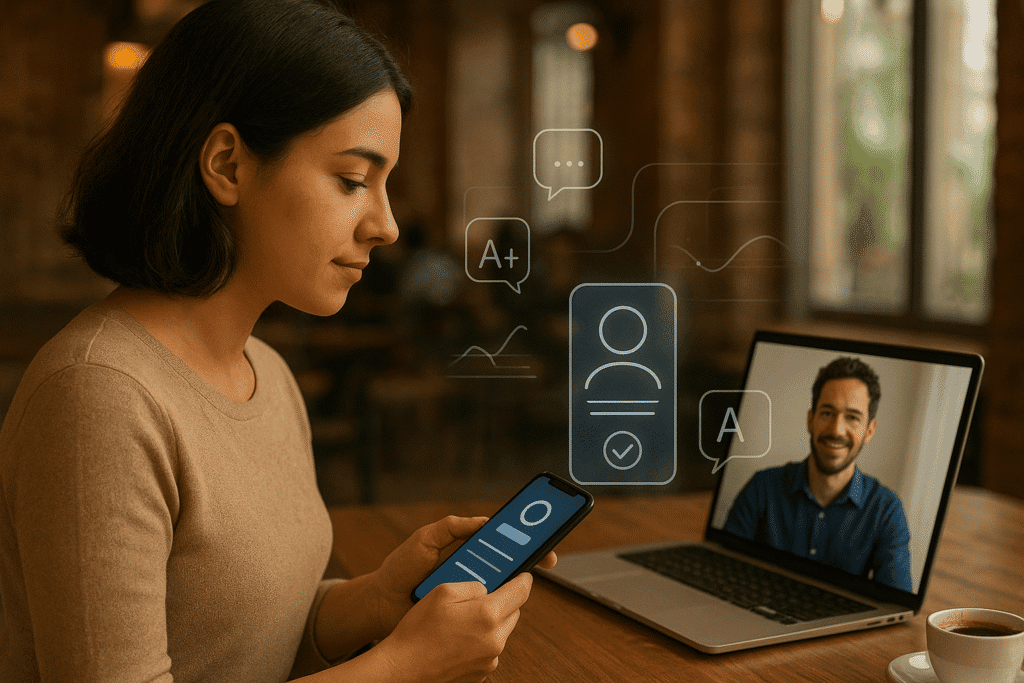
Adaptive algorithms personalize content, but personalized language tutoring still offers deeper feedback and accountability.
Below an overview of the fine nuances between adaptive learning and traditional methods.
Feature | Adaptive Learning | Traditional Methods |
|---|---|---|
Pacing | Adjusts to individual learner | Fixed pace for all students |
Content | Personalized based on performance | Same curriculum for everyone |
Review | Scheduled based on forgetting curves | Random or no systematic review |
Difficulty | Continuously adjusts in real-time | Fixed difficulty progression |
Efficiency | Targets specific gaps | Covers all content regardless of need |
Progress | Variable speed based on mastery | Lockstep advancement |
Motivation | Maintains optimal challenge | Can bore or overwhelm learners |
Worth reading next:
- Best Practices for AI Vocabulary Learning
- How Spaced Repetition Works for Building Vocabulary Fast
- Best Spaced Repetition Software to Master Vocabulary
- Language Assessment Apps and Smart Progress Tracking
Conclusion
Adaptive learning is one of those things that quietly makes modern language apps much better than they used to be. Instead of forcing everyone through the same lessons at the same pace, these apps adjust around your strengths, weak spots, and study habits as you go.
That doesn’t mean the technology is magic. You still need consistency, real exposure to the language, and eventually some human conversation practice. But adaptive systems do help you spend more time on the things you actually struggle with instead of wasting energy reviewing what you already know.
If you use them the right way, they can make language learning feel less frustrating, more personal, and honestly a lot more motivating to stick with over time.
If you want to go deeper into AI technologies in language learning including adaptive systems, I’d also look at how AI in language learning is revolutionizing fluency.
Frequently Asked Questions
How do I know if an app uses adaptive learning?
Look for these features: spaced repetition vocabulary review, difficulty that adjusts based on your performance, personalized practice sessions focusing on your weak points, or claims about “AI-powered” or “personalized” learning. Most major apps (Duolingo, Babbel, Busuu, Lingvist) now incorporate adaptive elements.
Can adaptive learning work for complete beginners?
Yes, but initial assessment is crucial. Beginners need algorithms that start with absolute basics and advance carefully. Apps designed for beginners (like Duolingo) handle this well. More advanced adaptive systems may overwhelm true beginners who lack foundational knowledge.
Do adaptive language apps work for all learning styles?
Adaptive learning personalizes pace and content but doesn’t always adapt presentation format. Visual learners may still need visual content, auditory learners need audio, etc. Best apps offer multimodal content (text, audio, images, video) allowing algorithm to personalize within diverse formats.