Anki vs Memrise vs MosaLingua: Which SRS App Helps You Learn Faster?
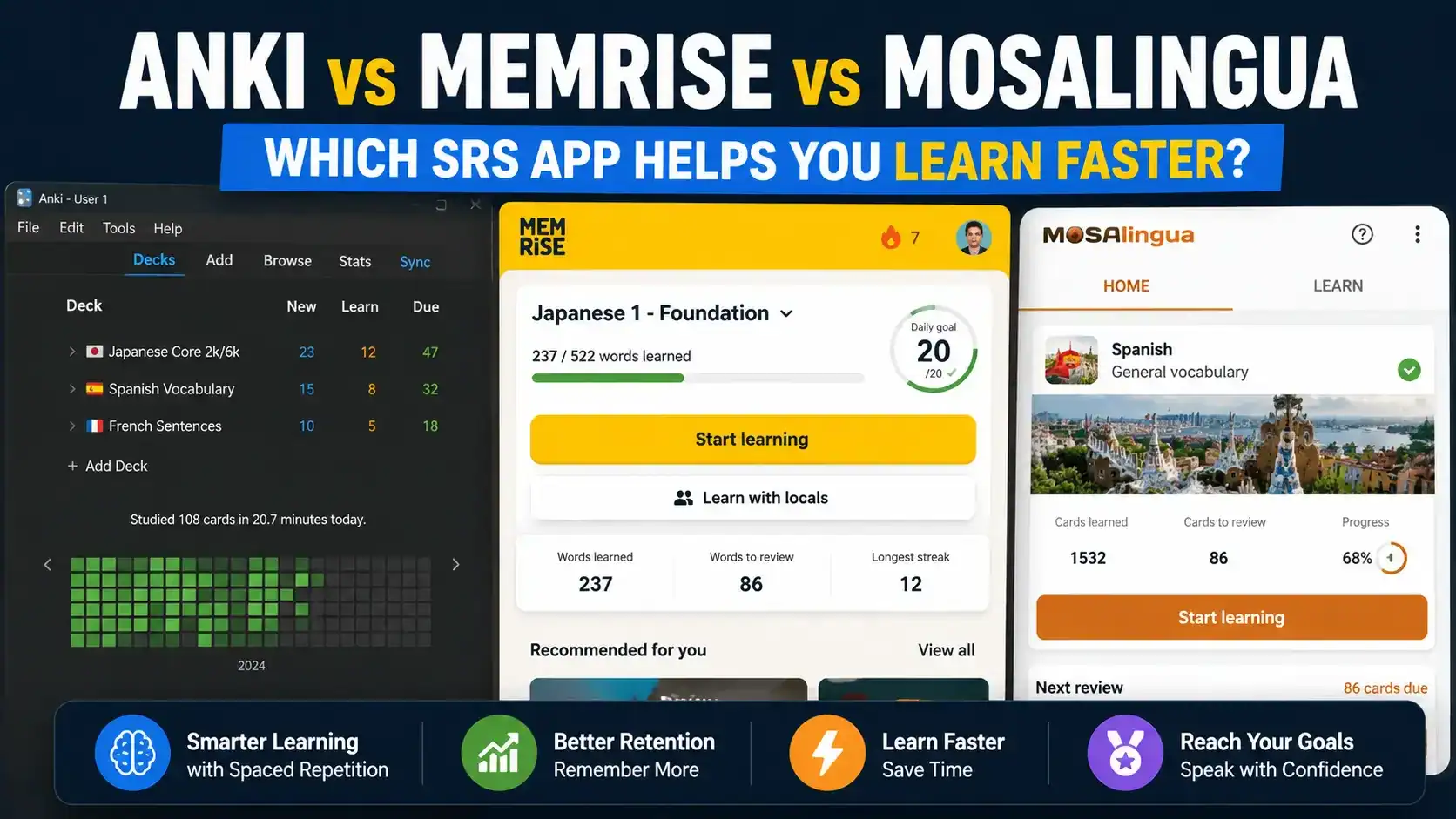
Spaced repetition apps can dramatically speed up vocabulary learning — but Anki, Memrise, and MosaLingua take very different approaches to the same core method.
Anki gives you total control with a blank-slate flashcard system. Memrise offers structured courses with video clips and AI tools built in. MosaLingua sits in between — guided lessons with curated word lists and automatic review scheduling.
The right choice depends on how much setup you want to do, how you prefer to learn, and how consistently you can stick to a daily habit.
This comparison breaks down all three apps across the features that actually matter for building vocabulary faster.
What is spaced repetition and why does it matter?
All three apps use spaced repetition software (SRS) — a method that shows you words at increasing intervals based on how well you remember them. The result is that you spend more time on difficult words and less on ones you already know.
Research consistently shows SRS outperforms traditional flashcard cramming for long-term retention. The difference between these three apps is not whether SRS works, but how much friction each app puts between you and daily practice. If you want a deeper explanation of the method itself, this guide covers how spaced repetition works for building vocabulary fast
What is each app?
Anki
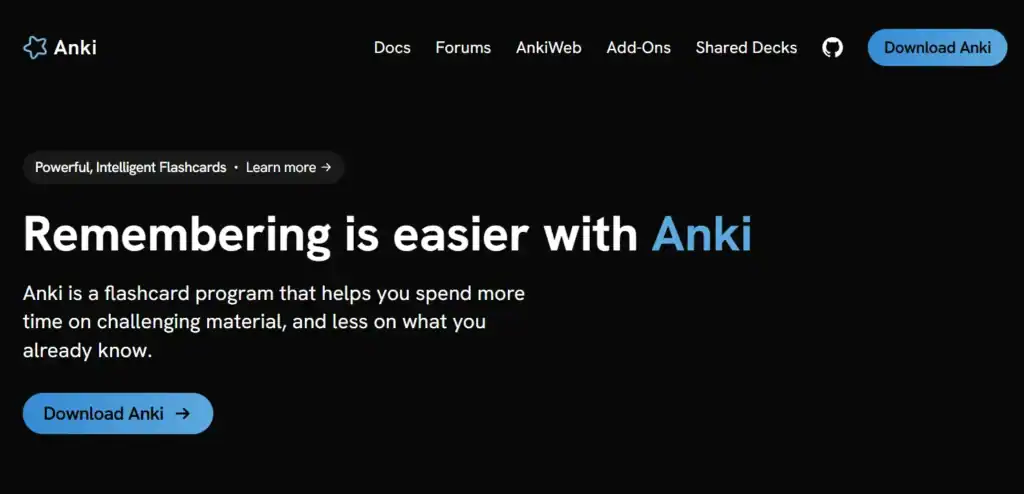
Anki is an open-source flashcard tool that gives you a blank system and lets you build or import any deck you want. It has one of the most sophisticated SRS algorithms available and a large community of shared decks. The trade-off is setup time — Anki rewards learners who are willing to invest in building their own system.
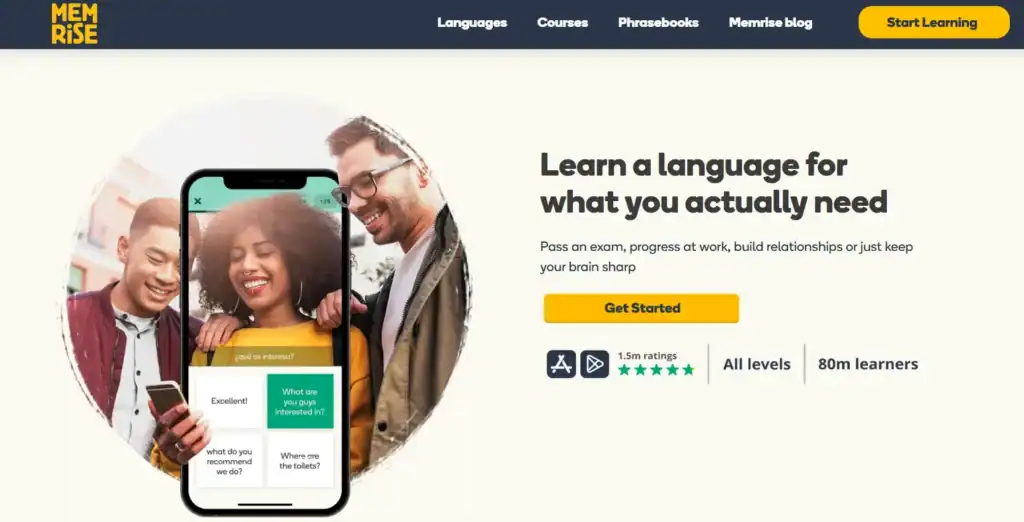
Memrise
Memrise is a structured language learning platform that combines SRS flashcards with short video clips of native speakers (MemTips), AI-generated grammar explanations, and pre-built courses for dozens of languages. It is free to start, with a paid tier that unlocks full course access and offline use. Memrise is a solid middle ground for learners who want structure without a heavy time investment.
For a full breakdown, see the Memrise review.
MosaLingua
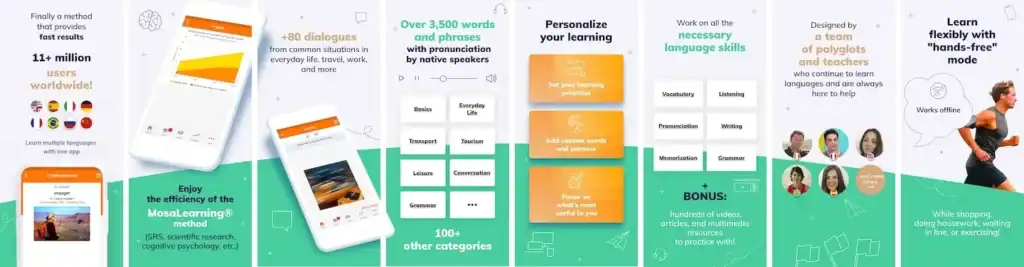
MosaLingua is a guided vocabulary learning system with pre-curated word lists, native pronunciation audio, example sentences, and automatic review scheduling. It requires no setup and is built for learners who want to start immediately. The app also includes MosaChat, an AI conversation tutor. MosaLingua is subscription-based with a free 7-day trial.
Anki vs Memrise vs MosaLingua: feature comparison
Feature |
|
|
|
|---|---|---|---|
Price | Free (Windows/Mac/Android); $24.99 one-time (iOS) | Free tier; Pro from ~$25.51/mo (US pricing may vary, check current rate at checkout) | Free trial, then from $5.99/mo billed annually |
Setup required | High | Low | None |
Customization | Very high | Moderate | Limited |
Built-in courses | No | Yes | Yes |
Native audio | Depends on deck | Yes | Yes |
Video content | No | Yes (MemTips) | No |
AI features | Via add-ons | Yes (AI grammar) | Yes (MosaChat AI) |
Offline use | Yes | Limited (Premium) | Yes |
Best for | Power users | Visual learners | Structured beginners |


Memrise vs MosaLingua
If you’re only weighing these two, the choice comes down to how you want to study. MosaLingua asks for zero setup: pick your language and start reviewing flashcards immediately, with offline access built in from the free trial onward. Memrise asks more of you upfront (choosing courses, working through its heavier interface) but pays that back with native-speaker videos, AI-driven grammar practice, and a genuinely large free tier that MosaLingua doesn’t match.
Price-wise, MosaLingua’s flat $5.99/month (billed annually) is the simpler commitment. Memrise’s Pro tier runs several times higher on a straight monthly plan, though it drops substantially on annual or lifetime billing, worth checking the current rate before you commit either way, since both platforms run frequent limited-time discounts.
Choose MosaLingua if you want a fast, low-friction habit with minimal decision-making. Choose Memrise if you want native-speaker video content and don’t mind a steeper learning curve to get there.
Which app helps you remember words faster
Speed of retention depends less on the algorithm and more on how consistently you actually use the app.
- Anki: The most powerful algorithm of the three. But you need to find or build quality decks before the algorithm has anything useful to work with. Setup time can delay real learning by days or weeks.
- Memrise: Ready to use from day one. The combination of SRS with native-speaker video clips (MemTips) adds a visual and auditory memory hook that text-only flashcards lack. AI grammar explanations add context without requiring a separate resource.
- MosaLingua: Curated word lists based on frequency mean you learn high-value vocabulary first. The built-in audio and example sentences help retention from the first session.
For most learners, less friction equals more consistency, and more consistency equals faster results. Memrise and MosaLingua both win on immediate usability. Anki wins if you are willing to put in setup time upfront.
Which app is easiest to use every day?
Daily habit formation is where these apps separate most clearly.
- Anki: Functional but spartan. The interface has barely changed in years. There is no gamification or streak system to keep you engaged on low-motivation days.
- Memrise: The most engaging of the three day-to-day. Video clips break up the monotony of pure flashcard review. The app also tracks streaks and progress visibly.
- MosaLingua: Clean, mobile-first design with a clear daily workflow: learn new words, review scheduled words, track progress. Simple enough that the routine becomes automatic.
If engagement is a concern, Memrise edges ahead. If you prefer a minimal, distraction-free routine, MosaLingua is the cleaner experience.
Which app is best for beginners?
Beginners need structure, context, and audio — not a blank flashcard system.
- Anki: Not ideal for beginners. Without knowing which words to learn first or how to set up the system, most new users underuse it or abandon it.
- Memrise: Good for beginners. Pre-built courses cover essential vocabulary in a logical order, and the MemTip videos help with pronunciation from the start. The free tier gives you a real taste before committing.
- MosaLingua: Also strong for beginners. Frequency-based word lists, example sentences, grammar tips, and native audio mean you get everything you need in one place.
Both Memrise and MosaLingua work well as a first SRS app. Memrise has a lower cost barrier to entry; MosaLingua requires a subscription but provides a more tightly structured learning path.
Not sure how to choose your first approach? How to choose a language learning method walks through the key decisions.
Can advanced learners benefit from any of these apps?
Advanced learners have different needs — they want to fill specific gaps, not follow a preset curriculum.
- Anki: The clear winner for advanced use. You can build decks around exactly the vocabulary you need — domain-specific terms, dialect words, sentence mining from content you are consuming. Full control over every review parameter.
- Memrise: Useful at an intermediate-to-advanced level for languages where the course content goes deep. The AI grammar feature and native video clips add value beyond basic word drilling.
- MosaLingua: Has advanced vocabulary packs for most languages, but customisation is limited. Better as a maintenance tool than a primary resource at C1+ level.
Can you use more than one app at the same time?
Yes, and many learners do. A common combination is Memrise or MosaLingua for structured daily vocabulary, and Anki for custom decks built around content you are actively consuming — books, podcasts, shows. The structured app handles habit and foundation; Anki handles the gaps.
The risk is review fatigue. If you spread your daily study time across too many review queues, none of them get consistent enough attention. One primary SRS tool, with a secondary for specific needs, tends to work better than three running simultaneously.
Which app should you choose?
The honest answer is that all three work if you use them consistently. The question is which one you will actually open every day.
- Choose Anki if you want maximum control, enjoy building your own system, and are an intermediate or advanced learner with specific vocabulary goals.
- Choose Memrise if you want a free-to-start option with engaging content, native-speaker video, and AI tools built in. Particularly strong for visual learners and those who need engagement features to stay consistent.
- Choose MosaLingua if you want a tightly structured, audio-focused vocabulary system with no setup required. Best for learners who want to start immediately and prefer a clean, focused experience.
If you are comparing a wider range of vocabulary tools, the best vocabulary learning apps covers the full category. For a deeper look at dedicated SRS tools including Anki alternatives, the best spaced repetition software has the complete breakdown.
Ready to start building vocabulary faster?
Pick the app that matches your learning style and open it today. Consistency over a week beats the perfect app you never use.
The most customisable SRS tool available.
Pre-built courses with video clips and AI grammar tools.
Structured lessons, native audio, no setup required.
Frequently Asked Questions
Is Anki completely free to use?
YAnki is free on desktop and Android. The iOS app costs a one-time fee. There are no subscriptions or ads on any platform.
Is Memrise free?
Memrise has a free tier that gives access to core course content. A paid subscription unlocks full course access, offline mode, and additional features. The free version is substantial enough to evaluate the app properly.
Does MosaLingua work offline?
Yes. Once lessons are downloaded, you can review vocabulary without an internet connection.
How does Memrise compare to MosaLingua?
Both are structured vocabulary apps with SRS built in. Memrise has a stronger free tier, more visual content (native-speaker video clips), and AI grammar tools. MosaLingua has a tighter, more focused curriculum and is generally considered better for learners who want a clean, audio-first experience with minimal distraction.
Can I use Anki and Memrise or MosaLingua at the same time?
Yes. A common approach is using Memrise or MosaLingua for structured daily vocabulary and Anki for custom decks built from content you are consuming. Keep total daily review time manageable to avoid burnout across multiple queues.
How much time should I study per day with an SRS app?
Most learners see steady progress with 10–20 minutes of daily review. Short, consistent sessions outperform longer sessions done irregularly.
Do these apps help with speaking, or only vocabulary?
All three focus primarily on vocabulary retention. MosaLingua adds pronunciation audio and a conversation AI (MosaChat). Memrise adds native-speaker video clips that help with listening and pronunciation. Anki supports audio if you include it in your decks. For dedicated speaking practice, these apps work best alongside a conversation tool.
Is the MosaLingua free trial risk-free?
Yes. The 7-day trial gives full access to core features and requires no payment to start. You can cancel before the trial ends without being charged.