
Top Reasons to Use Podcasts for Language Learning
Are you looking for an easy way to learn a new language? Podcasts might be your best ally in language learning! As a growing number of learners seek flexible, effective methods, podcasts for language learning have become incredibly popular for a number of reasons.
Unlike visual media requiring your eyes and attention, podcasts deliver pure audio immersion that fits seamlessly into your existing life. You’re not adding study time to your schedule—you’re transforming dead time (commutes, chores, exercise) into productive language practice.
What You’ll Learn:
- Why you should start using podcasts for Language Learning
- Introduce you to some of the best podcasts out there
- A closer look at options for beginners to advanced learners
- Tips on how to make the most of each episode
Why Podcasts Work Differently Than Other Language Learning Methods
Audio-Only Format Forces Active Listening
Here’s something that blew my mind when I started learning Italian through podcasts: without visual cues, your brain has to work harder—and that struggle is precisely what builds fluency.
When you watch Netflix or YouTube, visuals do half the comprehension work. Someone holds up a coffee cup while saying “caffè”—you understand instantly. Remove those visuals and your brain must decode meaning purely from audio: pronunciation, intonation, context, and vocabulary.
This sounds harder (and initially it is), but this challenge creates stronger neural pathways. You’re training your ear to recognize subtle sound distinctions, developing the ability to comprehend speech without environmental crutches—exactly the skill you need for real conversations.
I realized this during my first phone call in Italian. Suddenly, all those hours watching Italian TV felt useless because I couldn’t see facial expressions or gestures. But my podcast practice? That translated perfectly because I’d been training audio-only comprehension all along.
Multitasking Integration Eliminates Time Barriers
Let’s get real about the biggest obstacle to language learning: finding time. Between work, family, social obligations, and basic life maintenance, when are you supposed to study?
Podcasts solve this by transforming wasted time into learning time. That mind-numbing morning commute? Now it’s Italian immersion hour. Folding laundry? French listening practice. Grocery store line? Spanish podcast episode.
I turned my 45-minute traffic jam commute into 225 minutes weekly of Italian listening without adding a single minute to my schedule. That’s nearly 200 hours annually of comprehensible input I would have otherwise spent stewing in traffic frustration.
The psychology here is brilliant: you’re not “sacrificing” time to study—you’re upgrading activities you’d do anyway. This removes the mental resistance that kills most learning attempts.
Natural Speech Rhythms Build Intuitive Fluency
Textbooks give you grammatically correct sentences. Podcasts give you how people actually talk—with hesitations, filler words, false starts, interruptions, emotion, and all the messy reality of human communication.
When an Italian podcast host says “Allora, ehm, come posso dire…ah sì!” (Well, um, how can I say…ah yes!), you’re learning the rhythms and patterns of natural speech. These aren’t mistakes—they’re the authentic texture of language that makes you sound natural rather than robotic.
I distinctly remember catching myself using “allora” (well/so) as a filler word naturally in conversation. I hadn’t memorized it from a list—I’d absorbed it from hundreds of podcast hours. That’s intuitive acquisition, not conscious memorization.
Consistent Exposure Creates Familiarity
There’s something magical about listening to the same podcast hosts regularly: their voices become familiar friends. You learn their speech patterns, favorite expressions, and personality quirks. This familiarity breeds comfort and confidence.
My favorite Italian podcast became like a virtual Italian friend I visited daily. Some days I understood 90%, others maybe 60%, but the consistency of that familiar voice kept me coming back even when comprehension felt challenging.

Choosing Podcasts Matched to Your Level
The biggest mistake I see with podcasts is choosing content that’s either too difficult (frustrating) or too easy (boring). Strategic selection based on proficiency is crucial.
Beginner Level (A1-A2): Slow and Structured
At beginner level, you need podcasts specifically designed for learners—native content will overwhelm you.
What to look for:
- Deliberately slow, clear speech
- Structured lessons with explanations in English
- Short episodes (10-20 minutes max)
- Accompanying transcripts (essential at this level)
Top beginner picks:
Coffee Break Languages (Spanish, French, Italian, German)
This series completely saved my early Italian learning. Each 20-minute episode feels like a friendly lesson with a patient teacher. The host speaks English while gradually introducing target language phrases with clear explanations.
News in Slow (Spanish, French, Italian, German)
This was my secret weapon for transitioning from beginner to intermediate. Real news stories spoken at deliberately slow pace with vocabulary explanations. You’re consuming real content but at a manageable speed.
Language Transfer
This unique podcast uses a “thinking method” that teaches you to construct sentences logically rather than memorize phrases. Perfect for analytical learners who want to understand the “why” behind grammar.
Intermediate Level (B1-B2): Authentic Content with Support
At intermediate level, you’re ready for real podcasts made for natives, but you still benefit from learner-focused support.
What to look for:
- Clear speakers without extreme accents
- Predictable content structures (interviews, storytelling)
- Topics you’re familiar with
- 20-40 minute episodes
Intermediate game-changers:
Easy Podcast (Easy Italian, Easy Spanish, Easy German)
These “street interview” format shows feature hosts talking to random people about everyday topics. Authentic speech from real natives, but in controlled contexts that remain comprehensible.
StoryLearning Podcasts
These teach through compelling stories in the target language. The narrative structure helps comprehension because you’re following plot developments, which provides context clues.
Advanced Level (C1-C2): Pure Native Content
Welcome to the deep end—you’re ready for podcasts made by natives for natives, on any topic that interests you.
What to look for:
- Natural speech pace and conversational dynamics
- Complex topics and nuanced discussions
- Cultural references and idioms
- Multiple speakers
Advanced podcast types:
Comedy and Satire: The ultimate fluency test. If you understand why something is funny in another language, you’re thinking in that language.
News and Current Affairs: I graduated to Italian news podcasts around C1 level. Initially, I caught maybe 70%. Within months, I was following complex political discussions.
Interview and Conversation Shows: Natural conversation dynamics—interruptions, tangents, humor—exactly what real conversations look like.
History and Storytelling: I found an Italian history podcast about ancient Rome that became my obsession. The passion in the host’s voice made dense historical content captivating.

The Strategic Podcast Listening Method
Passive listening helps, but active engagement transforms comprehension into fluency.
The Three-Stage Listening Cycle
Stage 1: Casual First Listen (Comprehension Baseline)
Listen through the entire episode without stopping. Don’t stress about catching every word—just aim for general comprehension.
Goal: Establish baseline understanding without pressure.
When I do this: During commutes, walks, or cooking—activities that support casual listening.
Stage 2: Active Second Listen (Learning Phase)
Rewind and listen again, this time with a notebook ready. This is where real learning happens.
What to capture:
- Unknown words that seem important or frequently used
- Interesting phrases and expressions
- Grammar patterns you notice
Pro tip: Don’t stop constantly—that destroys flow. Note words with timestamps and research them later.
My system: I use voice memos to quickly record unknown words while listening. After the episode, I transfer them to my vocabulary system.
Stage 3: Transcript Review (Accuracy Check)
If transcripts are available, review them after listening. This reveals what you missed and corrects misheard words.
This stage is humbling but valuable. You discover you’ve been mishearing words for weeks.
The Shadowing Method for Pronunciation
Shadowing—speaking simultaneously with the audio—builds pronunciation skills that listening alone can’t develop.
How to practice:
- Play the podcast at low volume
- Speak along with the host, matching pace and intonation
- Don’t worry about perfection—focus on rhythm
- Record yourself occasionally
This felt absolutely ridiculous when I started—talking to myself in Italian while walking my neighborhood. But my accent improved dramatically within weeks. Sometimes looking silly is worth the results.
Turn Podcast Vocabulary Into Long-Term Memory
Podcasts expose you to massive amounts of natural language—but exposure alone doesn’t guarantee retention.
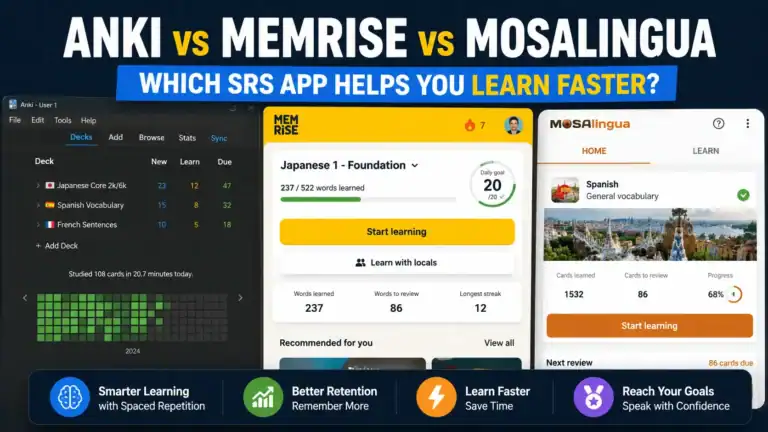
To actually remember the words and phrases you collect from podcasts, you need a system that brings them back at the right time. That’s where spaced repetition becomes essential. For a mobile-first option you can use on the go, the best vocabulary learning apps is the place to start. If you want deeper algorithmic control over your review schedule, the best spaced repetition software covers the more advanced tools.

Building Your Podcast Listening Routine
The Daily Listening Anchor Strategy
Instead of vague goals like “listen more,” attach podcast listening to existing daily activities.
Suggested listening schedule:
- Morning commute: news podcast (30 minutes)
- Lunch walk: Lighter conversational podcast (20 minutes)
- Evening dishes: Story-based podcast (20 minutes)
- Weekend long walk: Interview show (60 minutes)
Total: 6-8 hours weekly without adding a single dedicated “study” minute to the schedule.
The anchor strategy works because you’re not relying on motivation—you’re building automatic triggers. When I start my car, I automatically launch my podcast app.
The Variety Rotation System
Don’t binge one podcast exclusively—rotate between types to develop balanced skills.
Suggested weekly rotation:
- Monday & Wednesday: News podcast (current events vocabulary)
- Tuesday & Thursday: Conversational interview show (dialogue patterns)
- Friday: Comedy or storytelling (pure enjoyment)
- Weekend: Challenging deep-dive content (pushing boundaries)
This variety prevents boredom and ensures diverse vocabulary exposure.
Progress Tracking That Motivates
What I track weekly:
- Total listening hours
- Episodes completed
- Estimated comprehension percentage
- New vocabulary captured
I keep this in a simple spreadsheet. Watching my weekly hours grow from 2 to 8+ over months provided proof I was building a genuine habit.
The Podcast Upgrade Ladder
Your podcast selections should evolve with your skills.
Progression strategy:
- Every month: Add one podcast slightly above your current level
- Every quarter: Drop one that’s become too easy
- Every six months: Attempt one “stretch” podcast
I stayed in beginner podcasts too long because they felt comfortable. That comfort was actually stagnation. Pushing into intermediate content felt uncomfortable initially but accelerated my progress dramatically.

Common Podcast Learning Mistakes to Avoid
Mistake 1: Passive Listening Without Engagement
The problem: Treating podcasts as background noise means your brain isn’t processing language
The solution: At least once daily, do one focused listening session—no phone, no distractions
Mistake 2: Choosing Content Above Your Level
The problem: Podcasts where you understand less than 50% create frustration
The solution: Choose content where you understand 60-80%. This range provides optimal challenge without overwhelming frustration.
Mistake 3: Never Taking Notes or Reviewing
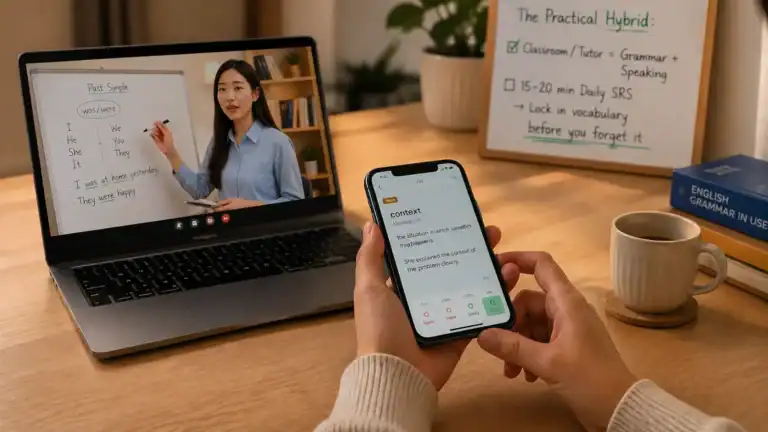
The solution: Implement a vocabulary capture system and dedicate 10 minutes post-episode to review, locking in what you hear with spaced repetition.
For detailed guidance, see our guide on how spaced repetition apps build vocabulary fast.
Mistake 4: Giving Up Too Soon
The solution: Commit to at least 10 episodes of the same podcast before judging effectiveness. Your comprehension will dramatically improve as you adapt to the host’s voice.
My first Italian podcast episode was maybe 30% comprehensible. I felt defeated. But I committed to ten episodes. By episode ten, I was catching 60-70% and actually enjoying it.
Start Your Podcast Language Learning Journey
Podcasts represent one of the most powerful yet underutilized tools in language learning—they develop listening comprehension, build authentic vocabulary, and train your ear for natural speech, all while fitting seamlessly into your existing routine.
The genius of podcast learning isn’t just effectiveness—it’s sustainability. When language practice happens during your commute, exercise, or chores, you’re not sacrificing time from other priorities. You’re upgrading activities you’d do anyway.
Remember: it’s about consistency, not perfection. Ten minutes daily of engaged listening beats sporadic marathon sessions every time.
Start today. Choose one podcast at your level in your target language, commit to just 10 minutes of focused listening, and anchor it to an existing daily activity.
Your future multilingual self is waiting on the other side of that play button. Time to press it.
If you prefer fully structured audio lessons over authentic content, my Pimsleur review is worth reading
For additional immersive learning strategies, explore our guides on learning through Netflix and using YouTube effectively.
Frequently Asked Questions
Can I learn a language just through podcasts?
Podcasts alone will develop excellent listening comprehension and substantial vocabulary, but won’t achieve complete fluency. You’ll also need speaking practice, writing practice, and grammar study.
Think of podcasts as your listening comprehension specialist within a broader learning strategy. For comprehensive approaches, see our ultimate guide to language learning technology.
How many hours of podcast listening until I see results?
With consistent practice (30-60 minutes daily):
Week 1-2: Ear adjusts to language rhythm
Week 4-6: Comprehension increases from 40-50% to 60-70%
Month 3-4: Can follow general meaning
Month 6+: Significant vocabulary expansion
Should I listen at normal speed or slower?
Start slower (0.75x – 0.9x): When encountering challenging content
Progress to normal (1x): As soon as comfortable—native speed is your goal
Eventually try faster (1.1x – 1.25x): Advanced technique that trains faster processing
I started at 0.8x speed because normal pace felt incomprehensible. Gradually increased to 1x, and now often listen at 1.1x.
What if I don’t have time to listen actively?
Even passive listening provides value through exposure. But prioritize 15-30 minutes of focused listening daily if possible.
Do what fits your life. Even 10 minutes of focused listening daily produces results. Don’t let perfect be the enemy of good.
How do I stay motivated when I barely understand?
Choose topics you genuinely care about
Celebrate small wins—understood one sentence? That’s progress!
Track comprehension percentages—seeing 35% become 50% proves improvement
Accept ambiguity—you don’t need 100% comprehension to learn
Use beginner-focused content for achievable wins
Strategies that helped me:
Choose topics you genuinely care about
Celebrate small wins—understood one sentence? That’s progress!
Track comprehension percentages—seeing 35% become 50% proves improvement
Accept ambiguity—you don’t need 100% comprehension to learn
Use beginner-focused content for achievable wins