Lingoda Review: Worth Your Time & Money? (I Took 6 Classes)
I have reviewed a lot of language learning tools on this site. Most of them I test from the outside. I read the documentation, watch the demo videos, sign up for the free tier, and poke around.
Lingoda is different. I actually sat in six live group classes, spoke Italian, got corrected by real teachers, and downloaded my annotated lesson notes after each session. This Lingoda review is based on that experience.
Here is what I found, including the parts that surprised me.
What Is Lingoda and Who Is It For?
Lingoda is an online language school. Not an app. Not a chatbot. An actual school, with scheduled classes, qualified teachers, and a structured curriculum based on the Common European Framework of Reference for Languages (CEFR). That is the international standard that goes from A1, which is total beginner, all the way up to C2, which is near-native fluency.
You can currently learn English, German, French, Spanish, Italian, or Business English.
Classes run around the clock, seven days a week, because Lingoda serves learners in every time zone.
Lingoda works best for people who want real structure. If you are a beginner who wants a clear path from zero to conversational, this is built for you. If you are an expat who needs to function in a new country quickly, the live speaking practice is exactly what you need. If you are learning a language for your job and want something to show an employer, the CEFR certificates are a genuine asset. And if you have been using Duolingo for a while and feel like you are going in circles, Lingoda is the step up that will actually make you speak.
A large portion of students in Lingoda’s group classes are already living or working abroad if you’re wondering how long that kind of structured immersion takes to produce results, this breakdown of realistic language learning timelines gives you the full picture.
Learners who understand their target language but freeze when speaking are also Lingoda’s core audience, why that gap exists and how to close it explains the science.
It is not the right fit for very casual learners. More on that in a moment.
Getting Started: Onboarding, Level Test, and First Booking
Signing up takes about two minutes. Three fields: name, email, password. Done.
The free trial gives you three group classes or one private class, for seven days, at no charge. You do need to enter your card details to start the trial. A temporary charge of €1 (or the equivalent in your currency) may appear for verification. It is refunded automatically.
A countdown banner at the top of your screen shows exactly which day of the trial you are on. That kind of transparency is a small thing, but it matters.
After signup, Lingoda walks you through three steps: find your level, find your first class, and start practicing. The level placement is a five-minute test. Lingoda will also email you a reminder to take it, and then email you the results.
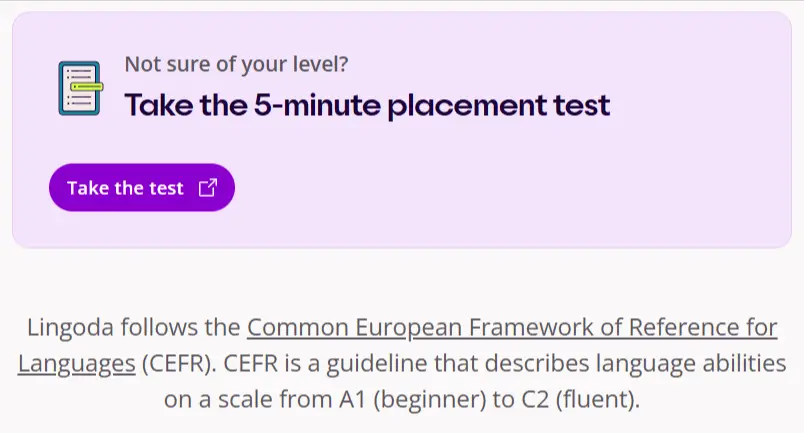
Here is where I hit my first surprise. I scored 6 out of 12 on the Italian placement test. That put me at B1.1, which is intermediate level. Sounds good. Except when I went to book my first class, I found out that Lingoda’s Italian courses only go up to A2.2 right now. They are working on B1, but there is no launch date yet.
To be fair, Lingoda is transparent about this when you ask. Their support team told me clearly: “The placement test is not linked or limited to the level we offer. It simply provides a level assessment.” And their chatbot connected me to a real human agent quickly, who explained how to set my level manually in the dashboard.
But it would be better if this were flagged upfront, before you take the test. If you are learning Italian and you are already past A2, check whether Lingoda currently covers your level before you sign up.
For most beginners, this is not an issue at all. Starting at A1 or A2 is exactly where Lingoda shines.
Once you set your level, booking a class is straightforward. You can see the start time, the teacher’s name, and who else has already signed up. You can book a class even before a teacher has been assigned to it. That transparency builds trust fast.
Want to try it yourself? Lingoda’s free trial gives you three group classes at no cost.
Inside the Classroom: What 6 Group Classes Actually Feel Like
Before the Class
Lingoda sends an email reminder before each session. It encourages you to spend five to ten minutes warming up. That means previewing the lesson material, which comes as a PDF, and getting familiar with the vocabulary for the day.
I did this before every class. It made a real difference. Walking into a live Italian class cold, with no warm-up, would have been stressful. Having already seen the words and the topic meant I could focus on speaking and listening instead of just survival mode.
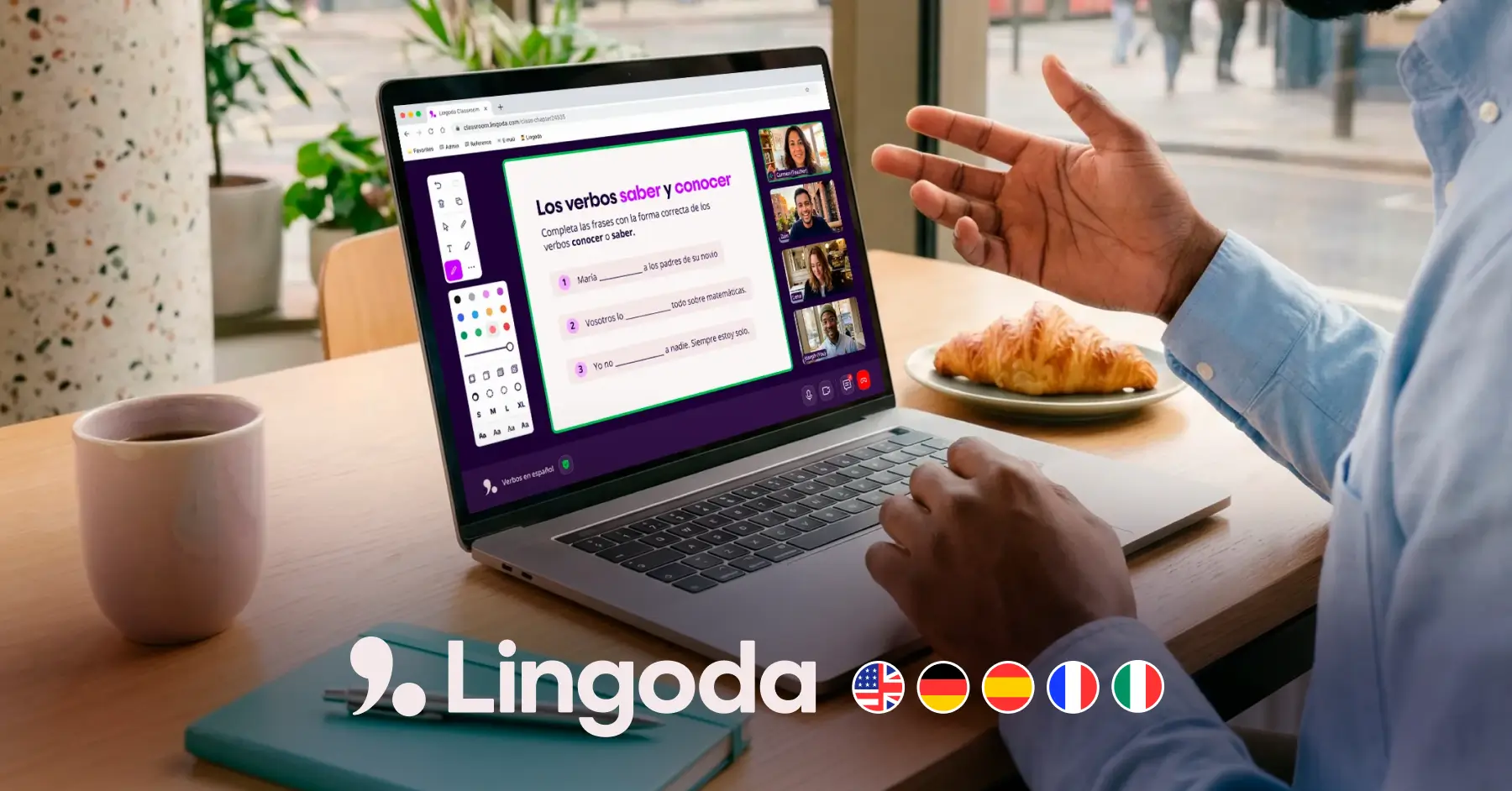
Lingoda is currently moving its classes from Zoom to its own browser-based classroom. Some sessions still use Zoom, so check the class details before you join. I used a standard laptop throughout all six classes and had zero technical problems. I chose a virtual background before my first class started and that was the only setup involved.
During the Class
The classes are conducted almost entirely in Italian. The teacher uses English only to clarify a word meaning when there is no other way to explain it. That immersive approach feels uncomfortable at first and then becomes exactly what you want.
My teachers were experienced. The pace was right. Not so fast that I was lost, not so slow that it felt like a children’s program. There was room for questions between exercises.
Group sizes were small. The largest class I attended had four students. In one session it was just me and one other learner. He was preparing to study in Italy and his Italian was noticeably better than mine. That is actually fine in a small group class. The teacher adjusts. And occasionally you might find yourself in a group class that turns into a de facto one-on-one session with the teacher, which is excellent value.
I am not a natural extrovert. I was anxious going into my first two classes. That feeling went away quickly. The teachers are there to help you move forward, not to judge you. By my third class I was answering questions without mentally rehearsing every word first.
That shift from bracing for judgment to just speaking is exactly the pattern this post on why you’re afraid of making mistakes when speaking a foreign language digs into, including a structured way to get there faster than I did by accident.
The teacher annotates the lesson PDF in real time during the class. After the session ends, you can download the PDF with all those annotations included. That becomes your personal lesson notes from a qualified language teacher. For free, after every single class.
After the Class
This is where Lingoda does something most platforms skip entirely.
After each class, the teacher writes you a personal class report. To access it, you have to rate the class, the lesson material, and the teacher first. That rating system is how Lingoda maintains quality across its teacher pool, so it makes sense.
The report itself is genuinely detailed. Not “good job, keep practicing.” It will tell you whether you are on track with the course content, and more importantly, it will tell you specifically what you need to work on.
Here is what my reports revealed. My placement test said B1 intermediate. My class reports said I have solid vocabulary and decent pronunciation. But my grammar is weak. That is actually the most useful thing I learned across all six sessions. Without those reports, I would have kept studying in a way that reinforced my strengths and ignored my real gap. That kind of honest, specific feedback is something no app can give you.
Practice Tools: What Happens Between Classes
The learning does not stop when the class ends. Lingoda has a full set of practice tools built into the platform.
Lingobites are short practice exercises designed to anchor what you just learned in your long-term memory. These work best on the mobile app. I used my laptop for live classes and my phone for Lingobites throughout the day.
Lingobot is Lingoda’s AI conversation tool. It lets you practice speaking outside of class. I will be honest: it is useful but not perfect. During one session, it the got the translation wrong of “Chiedi come si festeggia il compleanno in Italia” as it read “Ask how festivals are celebrated in Italy” instead of “Ask how birthdays are celebrated in Italy.” That is a meaningful error. The good news is you can submit feedback directly on Lingobot responses, and Lingoda actively uses that to improve it. If you want to explore what AI conversation practice looks like more broadly, I have a full post on AI chatbots for language practice that covers the landscape.
Vocabulary Trainer uses spaced repetition. You see a word, you try to recall it, and the system decides when to show it to you again based on how well you did. This is exactly how long-term vocabulary retention works. AI pronunciation coach tools explains the details if you want extra information.
Flashcards show you the word, play the audio so you hear the correct pronunciation, and let you flip the card to see the translation.
All of this feeds into your progress dashboard, where you mark lessons as complete and track your achievements. The gamification is genuine. Seeing your progress laid out visibly keeps you coming back.
Platform, Dashboard, and Technical Experience
The dashboard is easy to navigate. The top menu has five clear sections: Today, My Classes, My Course, Practice, and Book Classes. Everything is where you expect it to be.
Under your profile you can see all the feedback your teachers have given you, your progress through the course, and your achievements. It is a honest record of where you are and how far you have come.
Lingoda is also rolling out a CEFR certificate for every level you complete. For Italian A2.1, you need to attend at least 45 of the 50 lessons. That certificate is a real credential. If you are learning Italian for work, for relocation, or for university, it carries weight.
The platform is still developing. Lingoda has announced plans to add AI features to the classroom, including audio transcription and AI-generated feedback after sessions. Those are not live yet, but they point to where the product is heading.
Lingoda Pricing: What You Actually Pay
Lingoda charges per class, in a monthly subscription. You pay every four weeks. There is no contract. You can pause or cancel at any time.
Here are the current group class prices:
Plan | Price per class (USD) | Monthly total | EUR equivalent |
|---|---|---|---|
5 classes | $17.99 | $89.99 | €13.99 / €69.99 |
12 classes | $13.99 | $164.99 | €11.49 / €134.99 |
20 classes | $12.49 | $244.99 | €9.99 / €199.99 |
40 classes | $11.99 | $469.99 | €9.49 / €374.99 |


Is this cheap? No, it is not. Three classes a week on the 12-class plan works out to around €140 a month. That is roughly what a mid-range gym membership costs. The difference is that a gym membership gets you equipment you could use. Lingoda gets you a skill that stays with you for life. If you are learning for work, it is also worth asking your employer about reimbursement. Many companies will cover language training, especially if you can show a CEFR certificate at the end.
For people switching from Duolingo: Duolingo is free and comfortable. Lingoda costs money and makes you speak to a real person. That discomfort is exactly the thing that moves you forward faster.
Cancellation Policy
For standard monthly subscribers, the rule is simple. Cancel a class more than 72 hours in advance and your credit is refunded. Cancel with less than 72 hours notice and the credit is gone. The 72 hours is measured to the exact hour.
There is also a 30-minute immediate-cancel window. If you book a class and realise you made a mistake, you can cancel within 30 minutes of booking and get your credit back, regardless of when the class is scheduled.
The Lingoda Sprint: How to Get Money Back
Periodically, Lingoda runs a challenge called the Sprint. It is worth knowing about if you are a committed learner.
The Sprint runs for two months. You choose between the Regular Sprint (15 classes per month) or the Super Sprint (30 classes per month). If you attend every required class, you get either 50% or 100% of your subscription fees back, depending on which option you chose.
The most recent Sprint, Sprint 70, run from May to July 2026. Sprints are not always available, but Lingoda announces them regularly. If you are serious about making progress quickly and want to reduce the net cost, keep an eye on the Lingoda website for the next one. Note that only group classes count toward the Sprint reward, and you can only attend one class per day.
What Lingoda Does Well (and Where It Falls Short)
Lingoda does several things genuinely well. The structured CEFR curriculum means you always know where you are and what comes next. The teachers are qualified and experienced. The post-class reports are the best feedback system I have seen in any language learning tool I have reviewed. Scheduling is flexible with classes running at all hours, and the combination of desktop for live classes and the mobile app for daily practice is genuinely smart design.
There are real limitations too. The cost is the obvious one. Lingoda requires commitment and self-discipline. You set the pace, which means you can also let it slide. Italian currently stops at A2.2, with no firm date for B1 content, which matters if you are already at an intermediate level. And Lingobot, while useful, still has accuracy issues that Lingoda is actively working on.
Who Should (and Should Not) Use Lingoda
Lingoda is a strong fit if you are a structured learner who wants a clear curriculum and measurable progress. It works well for professionals learning for career reasons, especially if your employer can help with the cost. It is excellent for expats who need to build functional fluency in a new country quickly, and for travelers who want real conversational ability rather than just memorized phrases.
It is also a good next step for people who have been using self-study apps and feel stuck. If you have spent time with Duolingo or Babbel and can recognize vocabulary but freeze when you try to speak, Lingoda’s live group format is exactly the jump you need. For a broader look at where to start, my best language learning apps for beginners post covers the options at a lower price point.
Lingoda is less ideal for very casual learners who just want something to dabble with. The live class format rewards preparation and consistency. If you are not ready to commit time around the class schedule, the value drops quickly. And if you are an Italian learner already past A2, check whether your level is available before signing up.
Lingoda vs Preply: A Quick Comparison
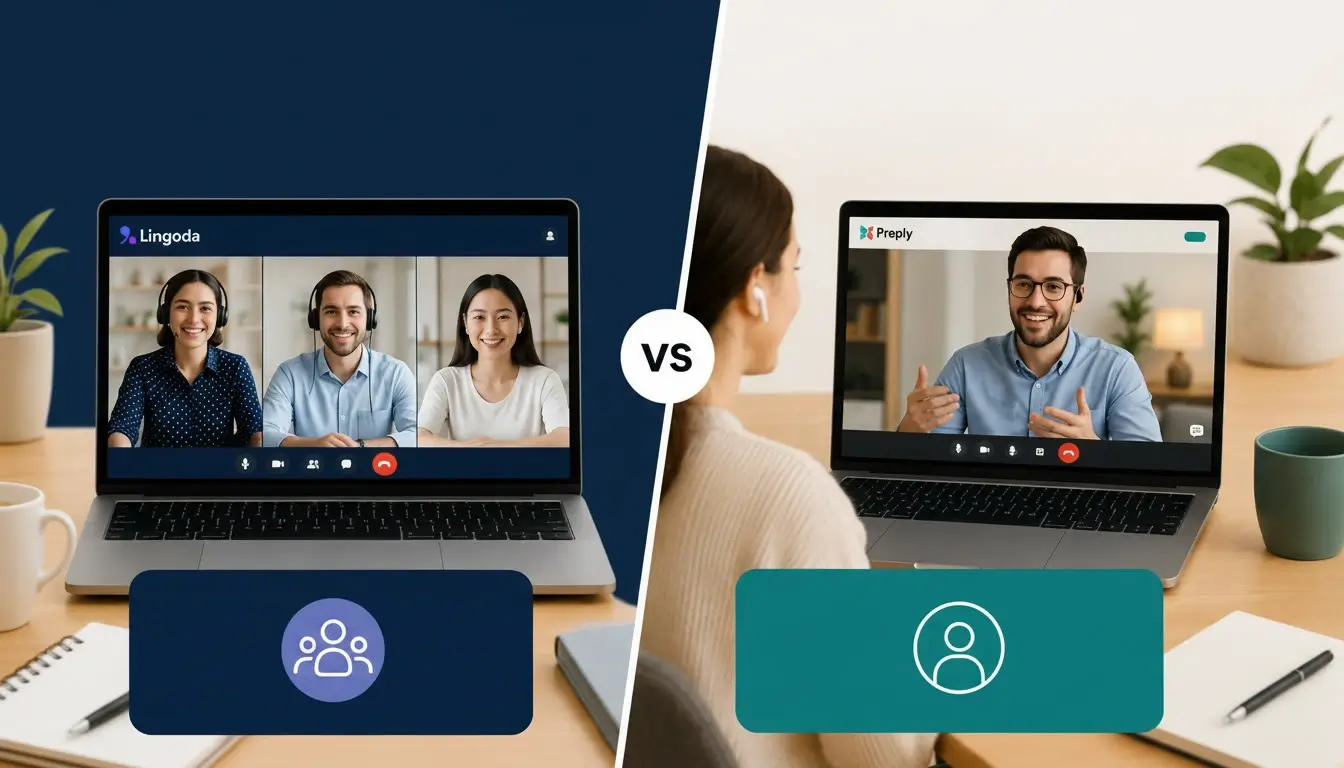
Both platforms use live online sessions with qualified teachers. The difference is in the structure. Lingoda gives you a fixed curriculum, scheduled group classes, and a clear CEFR path to follow. Preply gives you flexible one-on-one sessions where you choose the teacher, set the agenda, and move at whatever pace you negotiate together.
If you want structure and accountability, Lingoda fits better. If you want complete flexibility and a tutor tailored to your specific goals, Preply is worth a look. I have a full Preply review here if you want to compare the two in detail. For the full head-to-head, including the research behind why one-on-one tutoring often edges out group classes and what happens once you outgrow Lingoda’s curriculum, see Lingoda vs Preply: Which Fits Your Learning Style?.
For more options on live tutor platforms, see my best language learning platforms with live tutors guide.
Final Verdict: Is Lingoda Worth It?
Yes, for the right person.
Here is the honest math. Lingoda currently offers Italian from A1.1 to A2.2. That is four levels, each with 50 lessons, which comes to 200 lessons total. At the average pace Lingoda reports for its students, two to three classes a week, you are looking at roughly 12 to 16 months to go from complete beginner to A2.2 completion. At a more committed pace of five classes a week, you could do it in around seven months. At the end of that journey, you have four CEFR certificates and real conversational ability in a language you did not speak before.
That is not a small thing.
Lingoda is not cheap. But the live classes, the qualified teachers, the structured curriculum, and the detailed personal feedback add up to something that genuinely works. Set aside the time, prepare before each class, use the app between sessions, and you will make real progress.
Frequently Asked Questions
Is Lingoda better than Duolingo for speaking?
Duolingo keeps you comfortable. Lingoda makes you speak to a real person, which is exactly what moves you forward faster.
Can beginners use Lingoda?
Yes, and it is actually where Lingoda works best. You start with a free placement test that tells you exactly which level to begin at.
How many Lingoda classes should I take?
Lingoda’s own data shows most students take two to three classes a week. At that pace, one level takes around four months. Three classes a week at the 12-class plan costs roughly €140 a month.
Is Lingoda worth the price?
Yes, if you show up consistently. The live classes and personal teacher feedback give you something no app delivers. Occasional users will not get the value. Committed learners will.
Will I receive proof of my learning progress?
Yes. Lingoda awards a CEFR certificate for each level you complete. For Italian A2.1, you need to attend at least 45 of the 50 lessons.