
20 Best Language Learning Apps for Fluency in 2026
Choosing the right language learning app can feel overwhelming — with dozens of options promising fast results.
This guide covers both free and paid options, including the best free picks for beginners and the paid tools worth the investment for serious learners.
I have spent years testing these platforms while working toward fluency in multiple languages, including Italian. Some methods worked. Many didn’t.
This guide breaks down the 20 best options based on real-world testing and what actually drives measurable progress.
What Are the Best Language Learning Apps?
It depends on your learning style and goals:
- Need structure as a beginner?
- Want to improve speaking skills?
- Prefer gamified motivation?
- Learning for business or travel?
The apps below are categorized by strength — not ranked 1-20 — because different tools work for different learners.
How We Evaluated These Apps
Each platform was assessed on:
- Curriculum structure & CEFR alignment
- Speaking practice quality
- Spaced repetition systems (SRS)
- AI/adaptive features
- Long-term effectiveness
- Value for money
Let’s dive into the category winners.
Final Category Winners
Best Overall Structured Language Learning App
Not every app offers a true curriculum. Many focus on vocabulary drills or gamified exercises without long-term progression.
For learners who want a structured path from beginner to intermediate, a clear framework matters.
Winner: Babbel
Babbel stands out for its CEFR-aligned lessons, strong grammar explanations, and logical skill progression. It balances structure with flexibility, making it suitable for serious learners who want measurable advancement rather than casual exposure.
Best for Beginners (Including Free Option)
Starting a new language requires momentum, simplicity, and low commitment. An ideal beginner platform should reduce friction, encourage daily practice, and offer enough free access to build foundational confidence.
This category prioritizes accessibility and ease of entry without sacrificing core learning value.
Winner: Duolingo
Duolingo lowers the barrier to entry with short lessons, clear visuals, and a generous free tier. While not the most academically structured option, it excels at helping beginners build daily consistency and foundational vocabulary.
Best for Speaking Practice
Apps often neglect real conversation. Speaking requires interaction, not just repetition.
For learners prioritizing practical communication:
Winner: HelloTalk
HelloTalk connects learners with native speakers worldwide, enabling authentic conversation practice through text, voice messages, and calls.
Want structured speaking with a real teacher? HelloTalk works well for informal practice, but if you want guided instruction and personal feedback, Lingoda offers live group classes with qualified teachers from around $12 per class. A free trial gets you three classes at no cost.
Best for Vocabulary Retention (Spaced Repetition)
Memorizing words is easy. Remembering them months later is not.
For learners focused on long-term retention, spaced repetition is essential.
Winner: MosaLingua
MosaLingua is built around memory science. Its review algorithm prioritizes long-term recall rather than streak-based engagement, making it particularly effective for vocabulary acquisition.
Best AI-Driven Experience
Artificial intelligence is reshaping language learning, especially in adaptive review and simulated conversations.
For learners interested in interactive AI features:
Winner: Mondly
Mondly integrates voice recognition, chatbot simulations, and adaptive exercises into a polished interface. It provides one of the most AI-forward experiences among mainstream apps.
Best for Reading-Based Immersion
Intermediate learners benefit from large volumes of comprehensible input.
Winner: LingQ
LingQ provides access to real-world texts and audio, helping learners transition from textbook content to authentic material.
Best Audio-Based Method
Some learners absorb language best through listening and repetition rather than screen-based exercises.
Winner: Pimsleur
Pimsleur focuses on audio-driven lessons that build listening comprehension and speaking reflexes through guided repetition. Want the full breakdown before committing? My Pimsleur review covers whether the method still delivers results in 2026.
Comparison Table: The Best Language Learning Apps at a Glance
Prefer a quick overview? Here’s a side-by-side comparison of the best language learning apps covered in this guide.
App | Best For | Price | Learning Style | Languages |
|---|---|---|---|---|
Babbel | Practical conversations & structure | From €6.99/mo | Dialogues, grammar tips | 14 |
Beelinguapp | Reading with side-by-side text | Free; Premium €5/mo | Reading + audio | 14 |
Busuu | Study plans + real speaking feedback | Free; Premium from €5.83/mo | Structured lessons + feedback | 12 |
Clozemaster | Intermediate vocabulary builder | Free; Pro €7.99/mo | Cloze sentences | 50+ |
Drops | Fast visual vocabulary sessions | Free limited; €8.49/mo | Visual flashcards | 40+ |
Duolingo | Gamified beginners & casual learning | Free; Premium from €7.99/mo | Gamified, bite-sized lessons | 35+ |
FluentU | Real-world immersion via video | €24.99/mo | Video immersion | 9 |
HelloTalk | Practice with native speakers | Free; VIP €4.99/mo | Conversation exchange | 150+ communities |
LingoDeer | Asian languages | From €11.99/mo | Grammar-focused lessons | 12 |
LingQ | Immersion through reading/listening | Free limited; €7.99/mo | Input-based immersion | 25 |
Lingvist | Fast vocab building | Free trial; €9.99/mo | Spaced repetition | 8 |
Mango Languages | Travelers & conversational learners | From €7.99/mo | Practical dialogues | 70+ |
Memrise | Visual learners + real-life video | Free; Pro from €8.49/mo | Video clips + vocab | 23 |
Mondly | Fun gamified introduction | Free; Premium €9.99/mo | Gamified vocabulary | 40+ |
MosaLingua | Fast, efficient flashcard system | €9.99/mo | SRS flashcards | 9 |
Pimsleur | Audio-first speaking practice | €14.95/mo | Audio method, repetition | 50+ |
Rocket Languages | Grammar-rich structured lessons | From €99.95 | Audio + grammar | 13 |
Rosetta Stone | Immersive “no-translation” method | From €9.99/mo | Immersion, audio-heavy | 24 |
Speechling | Improve pronunciation | Free; Coaching €19.99/mo | Feedback from coaches | 8 |
Tandem | Serious conversation partners | Free; Pro €5.99/mo | Chat + voice exchange | 160+ communities |
All 20 Language Learning Apps Reviewed
Here’s an in-depth look at all 20 apps, listed alphabetically for easy reference.
Babbel

Babbel focuses on practical language use, with lessons designed around real-life conversations. Unlike heavily gamified apps, Babbel emphasizes structure and clarity, making it appealing to learners who want a more guided experience.
Lessons are built by language experts and tend to progress in a logical, skill-based way.
Key Features
- Dialogue-based lessons
- Clear grammar explanations
- Practical vocabulary for everyday situations
- Courses available in 14 languages
Why You’ll Like It
Babbel strikes a balance between structure and usability. The focus on realistic conversations makes it easier to apply what you learn outside the app, and the grammar tips help clarify how the language actually works.
Things to Keep in Mind
There’s no fully free version beyond limited trial content, and the language selection is smaller compared to some competitors.
The Bottom Line
Babbel is a solid choice for learners who want structured lessons with a clear focus on speaking and real-world use. For a deeper look at how the platform holds up day-to-day, the full Babbel review covers pricing, research backing, and exactly who it’s best suited for.
Best For
Beginners and intermediate learners who want practical conversations and clear structure.
Pricing
Paid plans start from €6.99/month.
Beelinguapp
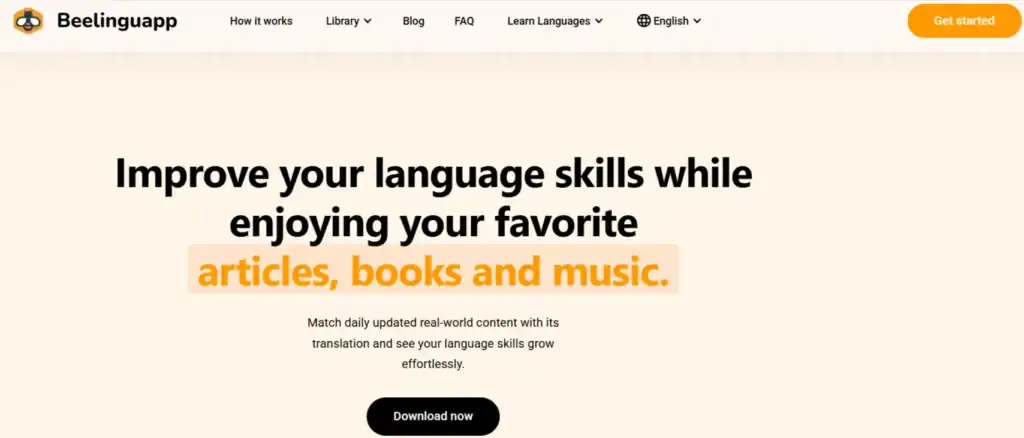
Beelinguapp focuses on reading practice using side-by-side translations. Texts are paired with audio narration, allowing learners to follow along in both their native and target languages.
The app emphasizes comprehension over production.
Key Features
- Side-by-side bilingual texts
- Audio narration
- Short stories and articles
- 14 available languages
Why You’ll Like It
Seeing translations alongside original text makes it easier to understand meaning without constant dictionary use. Reading while listening supports both comprehension and pronunciation.
Things to Keep in Mind
The app doesn’t emphasize speaking or writing skills. It works best as a reading-focused supplement.
The Bottom Line
Beelinguapp is a useful tool for improving reading comprehension and listening through text-based immersion.
Best For
Learners who want to improve reading comprehension with audio support.
Pricing
Free version available; Premium plans start from €5/month.
Busuu

Busuu combines structured lessons with community feedback, offering learners a mix of guided study and real interaction. The app includes study plans and opportunities to receive corrections from native speakers.
This makes it more interactive than many self-paced apps.
Key Features
- Structured lesson paths
- Study plans tailored to goals
- Feedback from native speakers
- Courses in 12 languages
Why You’ll Like It
The community feedback feature adds a human element that many apps lack. Structured lessons help keep progress organized, while corrections from native speakers can improve accuracy and confidence.
Things to Keep in Mind
Some key features are locked behind a premium subscription, and the language selection is more limited than larger platforms.
The Bottom Line
Busuu works well for learners who want structure but also value real feedback as part of their learning process.
Best For
Learners who want guided study with occasional real speaking or writing feedback.
Pricing
Free version available; Premium plans start from €5.83/month.
Clozemaster
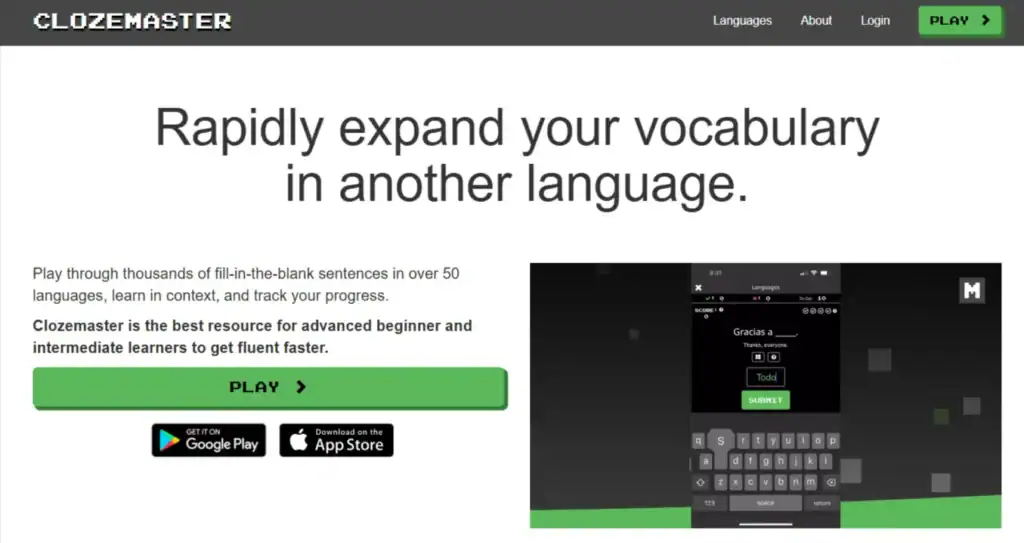
Clozemaster focuses on vocabulary acquisition through sentence-based practice. Instead of isolated words, learners fill in missing words within full sentences, reinforcing understanding through context.
The app is often used after learners move beyond beginner-level basics.
Key Features
- Cloze (fill-in-the-blank) sentence practice
- Focus on high-frequency vocabulary
- Gamified progress tracking
- 50+ available languages
Why You’ll Like It
Practicing vocabulary in context helps bridge the gap between recognition and real usage. Clozemaster works well for reinforcing what you’ve already learned and expanding vocabulary efficiently. See also my detailed review of the app.
Things to Keep in Mind
The interface prioritizes repetition over explanation. Learners looking for guided lessons or grammar instruction may find it limited.
The Bottom Line
Clozemaster is a strong supplementary tool for building vocabulary at the intermediate level.
Best For
Intermediate learners who want to expand vocabulary through context.
Pricing
Free version available; Pro plans start from €7.99/month.
Drops

Drops focuses on fast, visually driven vocabulary practice. Sessions are intentionally short, making the app easy to use in small pockets of time throughout the day.
The emphasis is on word recognition rather than full sentence construction or grammar.
Key Features
- Visual flashcard-style vocabulary lessons
- Five-minute daily sessions
- Strong focus on word recognition
- 40+ available languages
Why You’ll Like It
The visual approach makes vocabulary easier to remember, especially for learners who respond well to images and repetition. Short sessions reduce friction and make it easier to maintain a daily habit.
Things to Keep in Mind
Drops does not focus on grammar, sentence building, or speaking practice. It works best as a supplementary tool rather than a complete learning solution.
The Bottom Line
Drops is best used to quickly expand vocabulary, particularly for beginners or casual learners.
Best For
Learners who want quick, visual vocabulary practice with minimal time commitment.
Pricing
Limited free version available; paid plans start from €8.49/month.
Duolingo

Duolingo is one of the most widely used language learning apps, known for making language study feel accessible and low-pressure. Lessons are short, interactive, and designed to fit easily into a daily routine, even if you only have a few minutes at a time.
The app is especially popular with beginners who want a gentle introduction without committing to a structured course or paid program upfront.
Key Features
- Gamified, bite-sized lessons
- Daily streaks and rewards to encourage consistency
- Broad language selection (35+ languages)
- Free core experience with optional premium upgrade
Why You’ll Like It
Duolingo lowers the barrier to entry for language learning. The game-like design makes it easy to stay motivated, and the short lessons are well suited to busy schedules. For casual learners, it’s an easy way to build a daily habit without feeling overwhelmed.
Things to Keep in Mind
The gamified approach can feel repetitive over time, and explanations of grammar are limited. It’s less effective for learners who want in-depth instruction or faster progress in speaking and writing.
The Bottom Line
Duolingo is a strong starting point for beginners and casual learners, particularly if you want to experiment with a language before investing money. New to language learning? The best language learning apps for beginners is the right starting point before working through this list.
Best For
Complete beginners and casual learners who enjoy gamified learning and low commitment.
Pricing
Free version available; Premium plans start from €7.99/month.
FluentU

FluentU teaches languages through real-world videos, including movie clips, interviews, and news segments. Lessons are built around authentic media rather than scripted dialogues.
Interactive subtitles help turn passive watching into active learning.
Key Features
- Real-world video content
- Interactive subtitles
- Vocabulary tracking
- 9 available languages
Why You’ll Like It
Exposure to natural speech helps learners understand how the language is actually used. Video-based learning makes study more engaging and improves listening comprehension.
Things to Keep in Mind
FluentU is priced higher than many competitors and may feel expensive if used as a standalone tool. Grammar instruction is limited.
The Bottom Line
FluentU is best used as an immersion supplement rather than a complete course.
Best For
Learners who want immersion through authentic video content.
Pricing
Plans start from €24.99/month.
HelloTalk
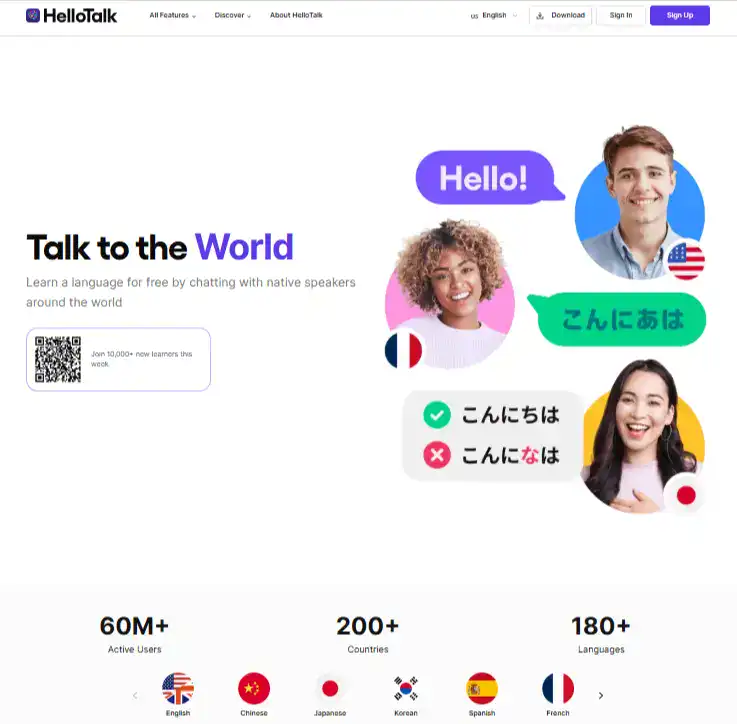
HelloTalk is a language exchange app that connects learners with native speakers around the world. Instead of lessons, the focus is on real conversations through text, voice, and video.
Built-in correction tools help guide learning during chats.
Key Features
- Text, voice, and video chat with native speakers
- In-chat translation and correction tools
- Large global user base
- 150+ language communities
Why You’ll Like It
Practicing with real people makes the language feel immediately useful. Exposure to natural conversation helps improve fluency and cultural understanding, which is difficult to replicate in lesson-based apps.
Things to Keep in Mind
Progress depends heavily on how actively you engage with other users. There’s little structured guidance, which may be challenging for beginners without a foundation.
The Bottom Line
HelloTalk is best used as a conversation practice tool alongside more structured learning apps.
Best For
Learners who want to practice with native speakers and improve conversational confidence.
Pricing
Free version available; VIP plans start from €4.99/month.
LingoDeer
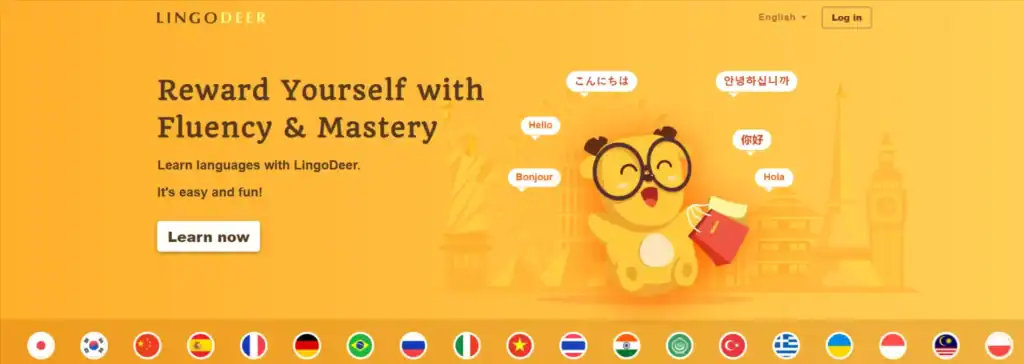
LingoDeer is one of the most underrated apps on the market—especially for Asian languages like Korean, Japanese, and Chinese. Lessons are structured and explanation-heavy compared to more gamified apps.
The app is often recommended for learners who want clear rules and sentence structure.
Key Features
- Grammar-focused lessons
- Clear explanations
- Strong support for Asian languages
- 12 available languages
Why You’ll Like It
Detailed explanations help learners understand how the language works, not just memorize phrases. The structured progression makes it easier to build a solid foundation.
Things to Keep in Mind
The app is less flexible than immersion-based tools and may feel slower for learners who prefer free exploration. Language selection is also limited.
The Bottom Line
LingoDeer is well suited for learners who want structured, grammar-driven lessons.
Best For
Learners focusing on Asian languages who want clear grammar instruction.
Pricing
Plans start from €11.99/month.
LingQ
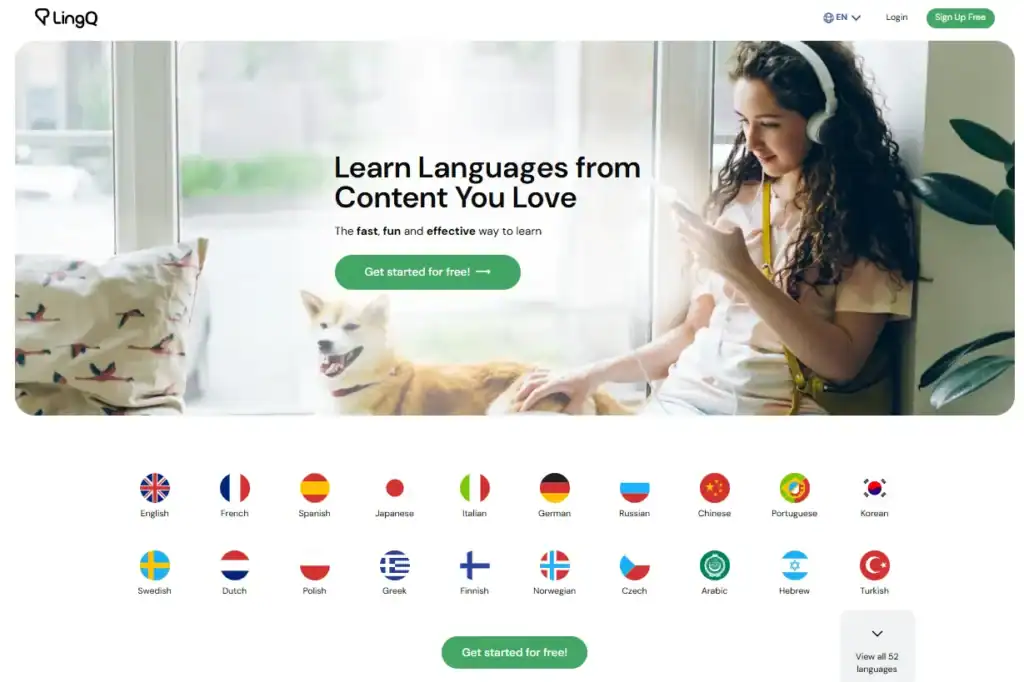
LingQ takes an immersion-first approach to language learning, focusing on reading and listening to real-world content rather than structured lessons. From articles and podcasts to videos you import yourself, the app encourages learning through repeated exposure.
It’s designed for learners who want to engage with authentic material early and build vocabulary naturally over time.
Key Features
- Large library of real-world content
- Ability to import articles, videos, and podcasts
- Automatic vocabulary tracking
- Input-based learning across 25 languages
Why You’ll Like It
LingQ feels less like studying and more like using the language. Learning through meaningful content makes it easier to stay engaged, especially for learners who lose motivation with rigid lesson plans. Over time, repeated exposure helps vocabulary recognition grow naturally.
Things to Keep in Mind
LingQ offers little in the way of structured grammar instruction, and the interface can feel overwhelming at first. Learners who prefer step-by-step guidance may find the self-directed approach challenging.
The Bottom Line
LingQ is a strong option for learners who want long-term exposure to authentic language rather than guided lessons.
Best For
Intermediate to advanced learners who enjoy reading, listening, and self-directed study.
Pricing
Limited free version available; paid plans start from €7.99/month.
Lingvist
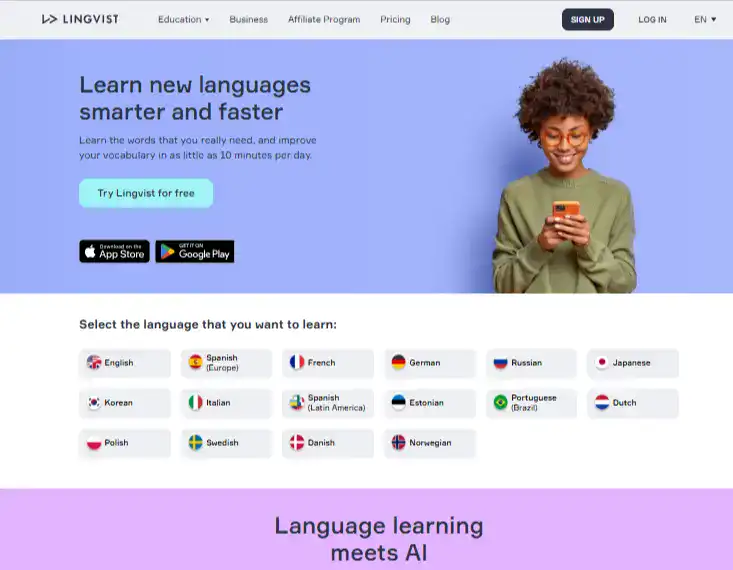
Lingvist is designed for fast, data-driven vocabulary acquisition. The app adapts to your progress and focuses on the most relevant words for each language.
Lessons are efficient and stripped of unnecessary extras.
Key Features
- Adaptive vocabulary learning
- Focus on high-value words
- Clean, minimal interface
- 8 available languages
Why You’ll Like It
Lingvist is efficient and time-conscious, making it appealing for learners who want measurable progress without distractions. The adaptive system helps prioritize words that matter most.
Things to Keep in Mind
Language selection is limited, and the app places little emphasis on speaking or listening practice. It’s best used alongside other tools.
The Bottom Line
Lingvist works well for learners who want fast, focused vocabulary improvement.
Best For
Learners who want efficient vocabulary building with minimal distractions.
Pricing
Free trial available; paid plans start from €9.99/month.
Mango Languages
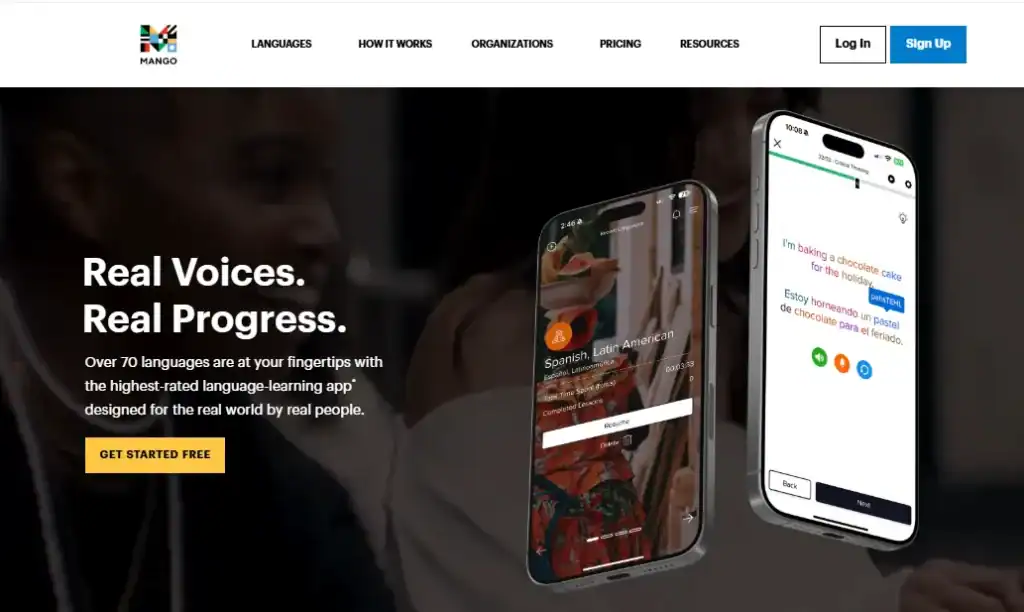
Mango Languages emphasizes practical conversation skills, often used by travelers and institutions. Lessons are dialogue-driven and focus on phrases you’re likely to use in real situations.
The platform supports a wide range of languages.
Key Features
- Conversation-based lessons
- Cultural context and tips
- Practical vocabulary
- 70+ available languages
Why You’ll Like It
The conversational focus helps learners feel prepared for real-world situations quickly. Cultural notes add useful context that goes beyond vocabulary alone.
Things to Keep in Mind
The lesson format can feel repetitive, and grammar explanations are relatively light. Some learners may outgrow the content over time.
The Bottom Line
Mango Languages works well for practical, travel-oriented language learning.
Best For
Travelers and learners focused on conversational language.
Pricing
Plans start from €7.99/month.
Memrise

Memrise focuses on vocabulary building through visual memory and short video clips featuring native speakers. The app blends spaced repetition with real-life language exposure, rather than traditional flashcard-based study.
It’s often used as a supplement alongside other learning methods.
Key Features
- Video clips of native speakers
- Vocabulary-focused lessons
- Spaced repetition system
- 23 available languages
Why You’ll Like It
The use of real people and authentic speech helps bridge the gap between textbook language and real-world usage. The visual approach makes vocabulary easier to remember, especially for visual learners.
Things to Keep in Mind
Memrise is less comprehensive when it comes to grammar and structured progression. On its own, it may not be enough for full language mastery.
The Bottom Line
Memrise is a strong vocabulary and exposure tool, particularly when combined with more structured apps.
Best For
Visual learners who want to build vocabulary and understand real spoken language.
Pricing
Free version available; Pro plans start from €8.49/month.
Mondly by Pearson
Mondly offers a gamified introduction to language learning, blending vocabulary practice with interactive exercises. The app is designed to be approachable and engaging for beginners.
It also includes speech recognition and chatbot-style interactions.
Key Features
- Gamified lessons
- Speech recognition exercises
- Chatbot conversations
- 40+ available languages
Why You’ll Like It
Mondly’s interactive design makes early learning feel engaging without being overwhelming. It’s easy to jump into lessons and build basic vocabulary and phrases quickly.
Things to Keep in Mind
The app is less detailed when it comes to grammar explanations, and progress may plateau without supplemental study.
The Bottom Line
Mondly works well as a fun introduction to a new language rather than a comprehensive course.
Best For
Beginners who want a light, gamified introduction to language learning.
Pricing
Free version available; Premium plans start from €9.99/month.
MosaLingua

MosaLingua centers on fast, efficient vocabulary acquisition using spaced repetition. The app prioritizes frequency-based words and practical phrases.
It’s designed for learners who want maximum efficiency with minimal distractions.
Key Features
- Spaced repetition flashcards
- Focus on high-frequency vocabulary
- Offline access
- 9 available languages
Why You’ll Like It
The efficient flashcard system helps reinforce vocabulary quickly. Offline access makes it convenient for travel or short study sessions.
Things to Keep in Mind
The app places little emphasis on speaking or grammar. It works best as a supplementary vocabulary tool rather than a standalone solution.
The Bottom Line
MosaLingua is a practical choice for learners who want fast, focused vocabulary practice.
Best For
Learners who want an efficient, flashcard-based vocabulary system.
Pricing
Plans start from €9.99/month.
Pimsleur

Pimsleur is an audio-first language learning program built around listening and speaking. Lessons are designed to be completed while commuting or multitasking, with a strong emphasis on pronunciation and repetition.
The method has been used for decades and follows a consistent, structured format.
Key Features
- Audio-based lessons
- Emphasis on speaking and pronunciation
- Spaced repetition system
- 50+ available languages
Why You’ll Like It
Pimsleur is effective for improving listening comprehension and spoken fluency, especially for learners who prefer to learn by ear. The hands-free format makes it easy to fit lessons into daily routines.
Things to Keep in Mind
The lack of visual support and limited reading or writing practice may not suit all learning styles. Lessons can also feel repetitive for some users.
The Bottom Line
Pimsleur is a practical option for learners who want to focus primarily on speaking and listening skills.
Best For
Learners who want audio-based speaking practice, especially while commuting.
Pricing
Subscriptions start from €14.95/month.
Rocket Languages

Rocket Languages offers comprehensive, grammar-rich courses that combine audio lessons with detailed explanations. The platform is designed for learners who want depth rather than quick, gamified sessions.
Courses are typically purchased as one-time packages rather than subscriptions.
Key Features
- Audio lessons with explanations
- Grammar-focused structure
- Cultural notes
- 13 available languages
Why You’ll Like It
The depth of instruction makes Rocket Languages appealing for serious learners who want to understand grammar and usage in detail. One-time pricing can also be appealing for long-term learners.
Things to Keep in Mind
The upfront cost is higher than subscription-based apps, and the interface feels less modern. It requires more time commitment per lesson.
The Bottom Line
Rocket Languages is best suited for learners who want a thorough, structured language course.
Best For
Learners who want in-depth grammar instruction and structured lessons.
Pricing
Courses start from €99.95 (one-time purchase).
Rosetta Stone

Rosetta Stone is known for its immersive, no-translation approach. Lessons rely heavily on images, audio, and repetition rather than explanations, aiming to mirror natural language acquisition.
This method has been used for decades and remains largely unchanged.
Key Features
- Immersion-based learning
- Audio-heavy lessons
- Speech recognition
- 24 available languages
Why You’ll Like It
The immersive approach encourages thinking directly in the target language. Consistent exposure to spoken language can help with pronunciation and listening skills, especially for learners who prefer learning by intuition rather than rules.
Things to Keep in Mind
There’s very little explicit grammar instruction, which can be frustrating for analytical learners. The pace may feel slow for those who want quick, measurable progress.
The Bottom Line
Rosetta Stone is best viewed as an immersion tool rather than a complete language course. The Rosetta Stone review has the full hands-on breakdown, including how its pricing and tutoring options now differ by region.
Best For
Learners who prefer an intuitive, immersion-first learning style.
Pricing
Plans start from €19.99/month.
Speechling
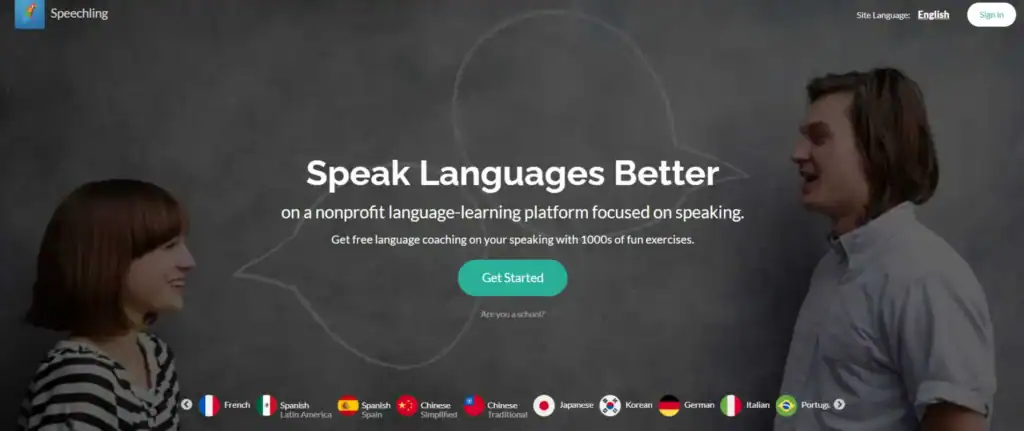
Speechling is focused on improving pronunciation and speaking accuracy through feedback. Learners practice speaking by repeating sentences and receive corrections, often from human coaches rather than automated systems.
The app is commonly used as a pronunciation supplement alongside other learning tools.
Key Features
- Pronunciation-focused practice
- Feedback from coaches
- Listening and repetition exercises
- 8 available languages
Why You’ll Like It
Direct feedback helps highlight pronunciation issues that are easy to miss when studying alone. Regular speaking practice can improve clarity and confidence, especially for learners aiming to sound more natural.
Things to Keep in Mind
Speechling does not offer a full language course. Vocabulary, grammar, and reading practice are limited, so it works best in combination with other apps.
The Bottom Line
Speechling is a targeted tool for learners who want to improve pronunciation and spoken accuracy.
Best For
Learners who want focused pronunciation feedback and speaking practice.
Pricing
Free version available; Coaching plans start from €19.99/month.
Tandem
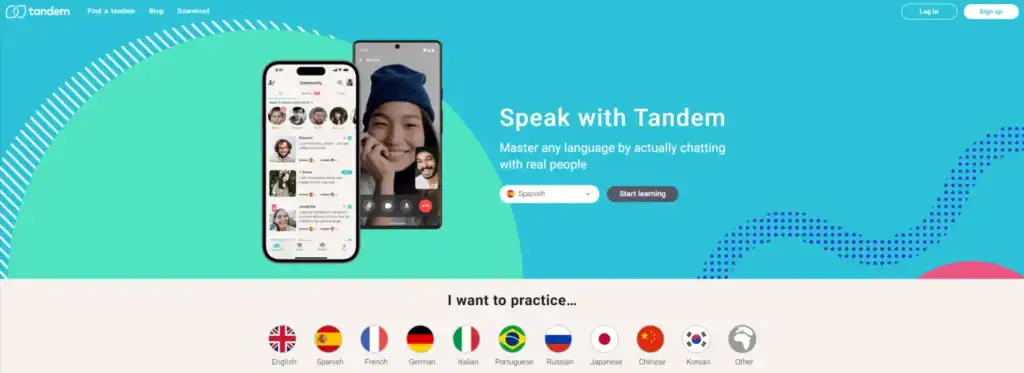
Tandem is a language exchange app built around one-to-one conversations with native speakers. Unlike more casual exchange platforms, it emphasizes meaningful interactions and profile matching to connect learners with compatible partners.
The app supports text, voice, and video communication, making it suitable for practicing real conversational skills.
Key Features
- One-to-one language exchange
- Text, voice, and video chat
- Profile matching and interests
- 160+ language communities
Why You’ll Like It
Tandem offers a more focused conversation experience than many exchange apps. Speaking with committed partners helps improve fluency, confidence, and cultural understanding through real interaction rather than scripted exercises.
Things to Keep in Mind
There’s no structured curriculum, so progress depends on how consistently you practice. Beginners without a foundation may find it difficult to hold conversations early on.
The Bottom Line
Tandem is best viewed as a conversation practice platform rather than a standalone learning system.
Best For
Learners who want serious conversation practice with native speakers.
Pricing
Free version available; Pro plans start from €5.99/month.
The Verdict: Which App is Right for You?
Choosing the right language learning app depends less on popularity and more on your specific goal.
Different tools excel in different areas — structure, speaking, vocabulary retention, immersion, or flexibility. Instead of asking which app is “best,” it’s more useful to ask what you want to improve first.
Here’s a practical way to narrow your decision:
- If you want structured progression: Choose a curriculum-based platform like Babbel or Rosetta Stone.
- If you’re just starting and want a low barrier to entry (including a strong free option): Duolingo offers accessible daily practice.
- If speaking and real interaction matter most: Community-based platforms like HelloTalk or Tandem provide conversational exposure.
- If long-term vocabulary retention is your priority: MosaLingua and Clozemaster focus on spaced repetition.
- If you prefer audio-first learning: Pimsleur emphasizes listening and speaking reflexes.
- If you value community correction and structured lessons combined: Busuu offers peer feedback integrated into its courses.
- If time is limited: Rocket Languages balances flexibility with structured progression.
The most effective app is not necessarily the most advanced or most expensive — it’s the one you’ll use consistently over months, not days.
Most platforms offer free trials or limited free tiers. Testing one or two options before committing is often the smartest approach.
If Babbel or Rosetta Stone are on your shortlist, a detailed side-by-side of how Babbel and Rosetta Stone compare covers the differences in pronunciation training, curriculum structure and pricing in one place.”
Final Thoughts
Language learning is not about completing lessons — it’s about building usable skills over time.
Whether your goal is travel, professional advancement, relocation, or personal growth, the key variables remain the same: structure, consistency, and meaningful practice.
Choose a method aligned with your learning style, commit to steady progress, and adjust as your needs evolve. Fluency is rarely fast — but it is achievable with the right system.
Frequently Asked Questions
Which language learning app is best for beginners in 2026
For beginners, accessibility and structured progression matter most. Duolingo provides an easy starting point with a strong free tier, while Busuu and Babbel offer more structured lesson paths.
Which app is best for speaking practice?
Apps focused on interaction perform best for speaking. HelloTalk and Tandem enable real conversation with native speakers, while audio-based systems like Pimsleur help build speaking reflexes.
What language app is best for fast fluency?
Progress speed depends on consistency and goal alignment. Structured platforms such as Babbel and retention-focused tools like MosaLingua often produce measurable results when used consistently.
Can I become fluent using only apps?
Apps are highly effective for vocabulary, grammar foundations, and daily consistency. However, combining app-based learmning with real speaking practice, through community interaction or immersive exposure, significantly accelerates fluency.