
Language Tutoring vs Exchange: How Online Platforms Compare
Should you pay for professional language tutoring or practice for free with native speakers through language exchange? This fundamental question affects every language learner’s journey and the right answer depends on your goals, budget, learning style, and current proficiency level.
Both online language tutoring platforms and language exchange platforms accelerate fluency, but they work in fundamentally different ways. Understanding these differences helps you choose the most effective approach or discover how combining both creates the ultimate learning strategy.
What You’ll Learn:
- How tutoring and exchange platforms differ
- When to choose each approach
- Cost comparison and value analysis
- The hybrid strategy for maximum results
- Decision framework to find your best fit
What Are Online Language Tutoring Platforms?
Online language tutoring platforms connect learners with professional instructors or native speakers for structured, paid lessons. These platforms facilitate one-on-one or small group instruction where teachers guide students through systematic curriculum, provide error correction, and track progress.
How tutoring works: You pay hourly rates ($10-50/hour typically) for scheduled lessons with qualified teachers. Sessions follow structured lesson plans tailored to your proficiency level and goals. Teachers typically hold teaching certifications (TEFL, DELE, DELF) or have extensive teaching experience.
Major tutoring platforms worth considering
Several platforms dominate the online tutoring space, each with a slightly different learning style and pricing structure.
Lingoda focuses on structured group and private classes that follow a clear curriculum, making it especially useful if you prefer a classroom, like environment with consistent progression.
👉 Read more: Lingoda review worth your time
italki offers one of the largest selections of tutors globally, giving you access to thousands of teachers across 150+ languages. It’s highly flexible, allowing you to choose tutors based on price, teaching style, and availability rather than fixed course structures.
👉 Compare platforms: italki vs Preply comparison
Preply is known for its structured, goal-oriented learning experience, where tutors often design customized learning plans based on your objectives such as fluency building, exam preparation, or professional communication.
👉 Full breakdown: Preply review 2026 – real tutors, real results
What tutoring excels at:
- Beginner-friendly systematic introduction to new languages
- Systematic skill building with proper foundation
- Personalized feedback identifying your specific errors
- Goal-oriented learning for exams or business needs

What Are Language Exchange Platforms?
Language exchange platforms facilitate peer-to-peer practice where two people teach each other their native languages. These platforms create opportunities for authentic conversations with native speakers at little or no cost.
How exchange works: You connect with someone who speaks your target language natively and wants to learn your native language. You take turns practicing each language, teaching each other through conversation. Most language exchange is completely free, both participants benefit equally.
Major platforms: Tandem, HelloTalk, and Speaky connect millions of language learners worldwide. These apps function like social networks for language learning, browse profiles, message potential partners, and start conversations.
What exchange excels at:
- Natural conversation skills developing authentic fluency
- Cultural insights, slang, idioms, real-world usage
- Cost-effectiveness with free native speaker practice
- Genuine interaction feeling like friendship conversations
Tutoring vs Exchange: Side-by-Side Comparison
Feature | Online Tutoring | Language Exchange |
|---|---|---|
Cost | $10-50/hour | Free (minimal platform fees) |
Instruction | Professional, structured | Peer-based, conversational |
Error correction | Systematic, pedagogical | Informal, may miss errors |
Scheduling | Formal appointments | Flexible, informal |
Best for level | Beginners to advanced | Intermediate to advanced |
Grammar focus | Systematic instruction | Minimal or casual |
Accountability | High (paid commitment) | Variable (depends on partner) |
Speaking practice | Guided practice | Spontaneous conversation |
Cultural learning | Professional context | Authentic, peer-based |
When to Choose Online Language Tutoring
Starting from zero? Professional tutoring provides the systematic foundation you need. Teachers introduce alphabet, pronunciation, basic grammar, and essential vocabulary in logical progression. Without this structure, beginners often feel overwhelmed and develop bad habits.
Why tutoring works for beginners: Teachers know exactly what to teach first, how to explain concepts clearly, and when to advance to new material.
You Have Specific Goals or Deadlines
Need to pass the DELE Spanish exam in three months? Preparing for business meetings in Mandarin? Professional tutors create targeted curriculum addressing specific objectives with measurable milestones.
Goal-oriented scenarios:
- Language certification exam preparation
- Business language for professional contexts
- Academic language for university studies
- Interview preparation in target language
You Struggle with Grammar and Pronunciation
If grammar rules confuse you or you can’t distinguish between similar sounds, professional instruction makes the difference. Teachers explain why languages work the way they do and correct subtle errors you might not notice.
You Value Structure and Accountability
Some learners thrive with structure, regular appointments, homework assignments, progress assessments. Tutoring provides external accountability that keeps you consistent even when motivation wavers.
For guidance on finding and evaluating tutors, see our guide on how to find your perfect online language tutor

When to Choose Language Exchange
Language exchange works best when you already have foundational skills, basic grammar, essential vocabulary, ability to form sentences. At this level, conversation practice solidifies knowledge and builds fluency without needing systematic instruction.
Your Priority Is Conversation Fluency
If you can read and write but freeze when speaking, exchange provides low-pressure practice. Repeated conversations with native speakers build speaking confidence and natural communication rhythm.
Conversation-focused goals:
- Speaking fluency and listening comprehension
- Natural speaking pace and conversational vocabulary
- Cultural communication norms
- Reducing hesitation and anxiety
You’re on a Tight Budget
Free practice with native speakers delivers incredible value. While it lacks structure of professional instruction, exchange costs nothing and provides unlimited practice opportunity.
Budget strategy: Use free exchange for speaking practice while supplementing with free apps, YouTube lessons, and library books for structured learning.
You Want Authentic Cultural Connection
Language exchange creates genuine friendships across cultures. Partners share their lives, traditions, perspectives, and humor, cultural education beyond textbooks.

The Hybrid Approach: Best of Both Worlds
Why choose one when combining both creates comprehensive learning? The most successful learners strategically use tutoring and exchange together, leveraging each method’s unique strengths.
How to Structure Hybrid Learning
Foundation building with tutors (1-2 lessons/week): Use professional instruction for systematic skill building, grammar rules, pronunciation correction, structured vocabulary, learning strategy guidance.
Conversation practice through exchange (3-5 sessions/week): Apply what you learned in tutoring through real conversations. Practice new vocabulary, test grammar rules, build speaking confidence, and develop natural fluency.
Progressive transition: As you advance, gradually shift emphasis from tutoring to exchange. Beginners need more structure; advanced learners need more authentic practice.
Complementary Benefits
Structured learning meets authentic practice: Tutors provide the “how and why,” exchange provides the “real-world application.” Together they create complete language competency.
Quality and quantity: Professional lessons deliver quality instruction in limited time. Free exchange provides quantity, hours of practice you couldn’t afford with paid tutoring.
Formal and casual registers: Learn formal, proper language from teachers; learn casual, conversational language from peers. Both are essential for true fluency.
Sample Hybrid Schedule
Beginner: 2 tutoring sessions/week + 2 exchange sessions/week = $30-60/week
Intermediate: 1 tutoring session/week + 4 exchange sessions/week = $15-30/week
Advanced: 1 tutoring session/month + 5+ exchange sessions/week = $15-30/month

Cost Comparison: Tutoring vs Exchange
Tutoring Costs
Per-lesson pricing:
- Budget tutors: $10-15/hour
- Mid-range tutors: $15-30/hour
- Premium tutors: $30-60/hour
Unlimited subscription models:
- BaseLang (Spanish): $179/month
- LingoCulture (French): $99-199/month
Realistic monthly costs:
- 2 lessons/week at $20/hour = $160/month
- 1 lesson/week at $30/hour = $120/month
Exchange Costs
Typically free: Most language exchange happens at zero cost, both participants benefit equally.
Optional platform fees:
- Tandem: Free (premium $6.99/month)
- HelloTalk: Free (VIP $12.99/month)
- Speaky: Free
Hidden time cost: Finding compatible partners requires trial and error. Expect to try 5-10 potential partners before finding 2-3 reliable matches.
Value Analysis
Tutoring value: Pays for expertise, structure, personalized feedback, and systematic progress. Worth the investment for serious learners with budgets allowing $100-250/month.
Exchange value: Free native speaker practice provides incredible ROI for intermediate+ learners who need speaking practice more than grammar instruction.
Hybrid value: Maximizes ROI, pay for professional instruction (2-4 hours/month) while getting unlimited free practice (10+ hours/month). Total cost $40-120/month.
Which Approach Is Right for You? Decision Framework
Answer These Quick Questions
1. What’s your current proficiency level?
- Complete beginner → Tutoring strongly recommended
- Intermediate (can have simple conversations) → Hybrid or exchange
- Advanced (comfortable conversing) → Exchange with occasional tutoring
2. What’s your monthly budget?
- $0-25 → Exchange + free apps
- $25-100 → Budget tutoring (1-2 lessons/month) + exchange
- $100-250 → Regular tutoring or hybrid
- $250+ → Premium tutoring or unlimited subscriptions
3. What’s your primary learning goal?
- Build foundational skills → Tutoring
- Pass certification exam → Tutoring
- Become conversationally fluent → Hybrid or exchange
- Maintain existing skills → Exchange
- Business/professional language → Tutoring
4. What’s your learning style?
- Need structure and accountability → Tutoring
- Self-directed, exploratory → Exchange
- Balanced approach → Hybrid
5. How much time can you commit weekly?
- 1-2 hours → Tutoring (maximize efficiency)
- 3-5 hours → Hybrid
- 5+ hours → Heavy exchange with occasional tutoring
Results
Mostly “tutoring”: Start with 2-3 tutoring sessions weekly. Focus on systematic skill building for 3-6 months, then gradually introduce exchange.
Mostly “exchange”: Begin exchange now, but consider 1-2 tutoring sessions monthly for targeted error correction. This prevents fossilization of mistakes.
Mostly “hybrid”: Perfect! Start with 1-2 tutoring sessions weekly while practicing 3-5 times weekly through exchange.
Supplementary Resources to Enhance Both Approaches
Whether you choose tutoring, exchange, or hybrid, these resources accelerate progress:
For vocabulary building:
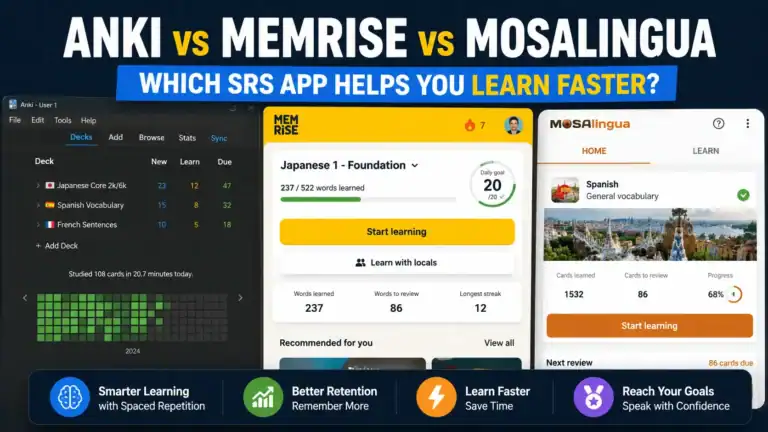
- Spaced repetition flashcards (Anki, Quizlet)
- Frequency dictionaries
- Word-of-the-day apps
For listening comprehension:
- Language learning podcasts
- Native content podcasts
- YouTube channels for learners
- Streaming services with target language content
For reading practice:
- Graded readers for your level
- News websites in target language
- Language learning blogs
For comprehensive exploration of digital tools, see our ultimate guide to language learning technology.
Conclusion
Choosing between online language tutoring platforms and language exchange platforms isn’t about finding the objectively “best” method, it’s about matching approach to your specific situation. Professional tutoring provides structure, expertise, and systematic progress at a financial cost. Language exchange offers authentic practice, cultural connection, and native speaker interaction at zero cost but requires more self-direction.
For most learners, the hybrid approach combining both methods delivers optimal results. Use tutoring for foundational skills, grammar clarity, and strategic guidance. Use exchange for conversation practice, cultural immersion, and speaking confidence.
Your ideal balance depends on your proficiency level, learning goals, budget, and available time. Beginners typically need more tutoring structure, intermediate learners benefit most from hybrid approaches, and advanced learners often thrive with exchange-heavy practice supplemented by occasional tutoring.
Ready to start? If you’re leaning toward tutoring, explore our comparison of the 11 best language learning platforms with tutors.
The most important decision isn’t choosing between tutoring and exchange, it’s committing to consistent practice with whichever method fits your needs. Start today, stay consistent, and watch your fluency transform!
Frequently Asked Questions
Can complete beginners use language exchange effectively?
Generally no, complete beginners lack foundational vocabulary and grammar needed for basic conversation. Exchange works best at intermediate level or above. Beginners should start with structured instruction (tutoring, apps, or courses) for 3-6 months to build foundation, then introduce exchange.
How do I find reliable language exchange partners?
Success requires trying multiple partners. Look for those who:
Have similar commitment levels
Share interests for engaging conversations
Balance language practice time fairly
Provide helpful corrections without overwhelming
Communicate reliably
Expect to try 5-10 potential partners before finding 2-3 reliable ones.
How long should tutoring sessions be?
60 minutes is standard, enough time for warm-up, focused instruction, practice, and homework review without feeling rushed or exhausting.
30-minute sessions work for conversation practice, targeted correction, or budget-conscious learners taking frequent lessons.
90-minute sessions benefit advanced learners on complex topics or intensive exam preparation.